Agentic AI in Recruiting: How Small Teams Can Hire Faster Without an Enterprise Budget
AI for recruiting at a small business: what agentic tools really do, the 2026 cost and time numbers, and a lean stack and 30-day plan to hire faster.
For most of the last decade, "AI in recruiting" meant a keyword filter buried inside an applicant tracking system that quietly rejected resumes nobody ever read. In 2026, that is no longer the story. The term that recruiting analysts keep returning to this year is agentic AI — software that does not just rank a list but actually runs multi-step work: it sources candidates, screens them, answers their questions, and books the interview, then hands a short, qualified list to a human. Search interest in "AI recruiting," "AI recruiting software," and "AI tools for recruiting" has all spiked into breakout territory, riding the broader wave of agentic AI. That is the trend. This article is about turning it into a hiring advantage if you are a small team without an enterprise budget.
Here is the honest-broker version up front: the big ATS brands are built and priced for enterprises, which leaves the "small business, no dedicated recruiter" slice wide open. You do not need their platform. You need a lean stack, a clear line between what to automate and what to keep human, and a plan you can run in 30 days. That is exactly what follows — a framework, not a news recap.
What "Agentic" Recruiting AI Actually Does (Source, Screen, Schedule)
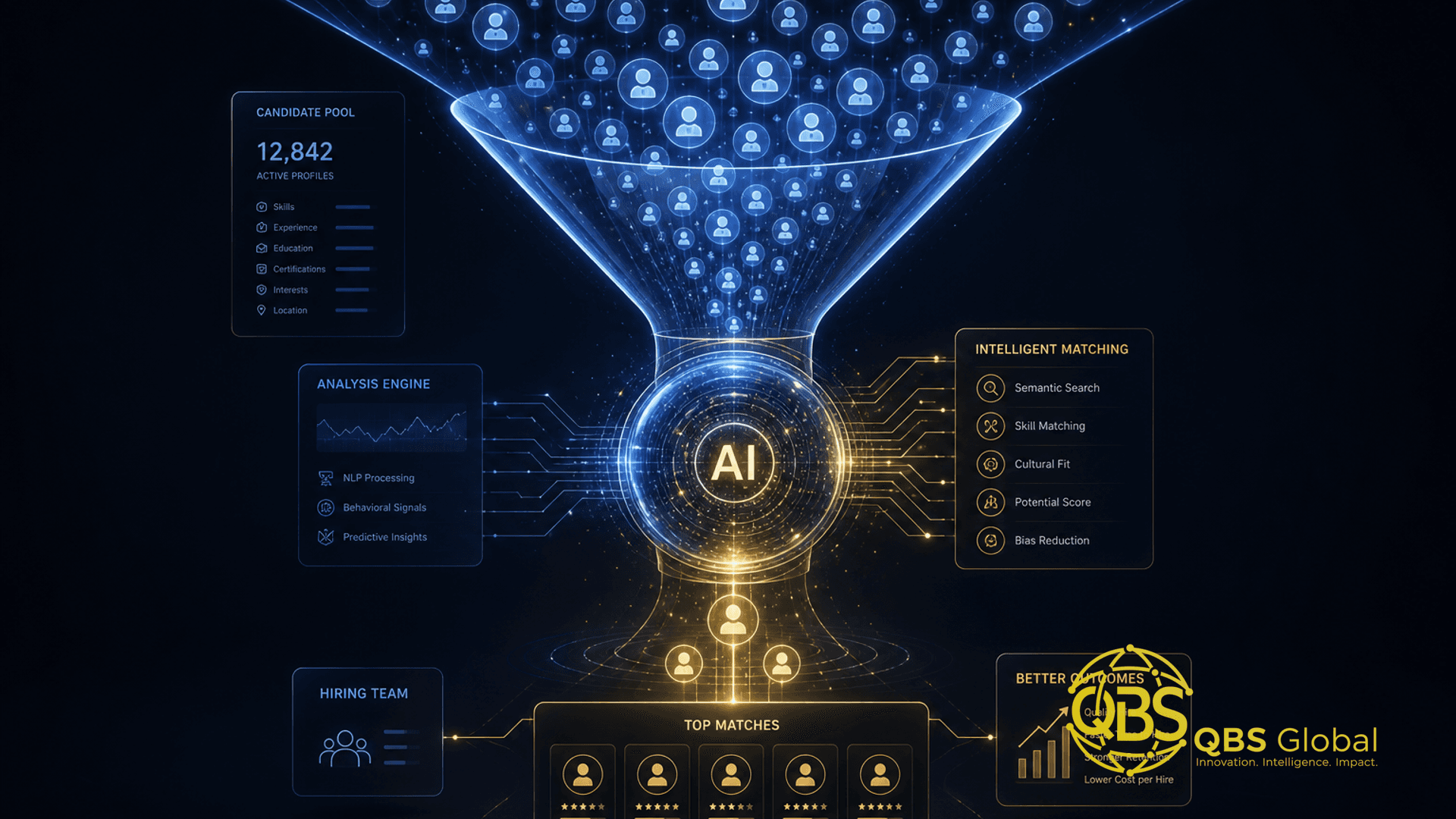
Older recruiting AI was reactive: you fed it resumes, it ranked them. Agentic AI is proactive and multi-step. You give it a goal ("find and shortlist five qualified backend developers for this role") plus guardrails, and it chains the steps together itself. In practice, that breaks into three jobs.
Source. The agent searches job boards, professional networks, and your own past-applicant database, then drafts personalized outreach. This matters more than it sounds. Manual sourcing eats hours per week per role — time a founder doing this between sales calls simply does not have — and it is the stage most likely to never happen at all when nobody owns it.
Screen. The agent reads each application against the role's real requirements — not just keyword presence, but a semantic read of whether the experience actually fits — and produces a ranked shortlist with reasons. Screening is the single most common AI recruiting use case for a clear reason: application volume per opening has climbed sharply as one-click and AI-assisted applying spread, and no human reads a few hundred resumes well or consistently. AI applies the same rubric to applicant one and applicant 250.
Schedule. The agent answers candidate FAQs, proposes interview times, and books them straight into your calendar. Interview coordination is pure overhead — back-and-forth email that adds no signal — and it is the stage an agent removes most completely.
The takeaway: agentic recruiting AI is not one magic tool. It is automation of the three slowest, most repetitive stages of the funnel — so the human time you do have goes to judgment, not data entry.
The 2026 Numbers: Realistic Cost-Per-Hire and Time-to-Hire Gains
This is a trending topic, which means it attracts inflated stats. Here are the figures that trace back to credible research, with the honest framing of what they mean for a small team.
| Metric | What the data shows | Source |
|---|---|---|
| Baseline cost-per-hire (non-executive, US) | $5,475 on average in SHRM's 2025 benchmarking | SHRM 2025 Benchmarking Reports |
| Earlier SHRM benchmark | $4,129 average cost-per-hire (widely-cited prior figure) | SHRM Benchmarking Report |
| AI resume-screening bias | Models favored white-associated names 85% of the time across 550+ resumes | University of Washington, 2024 |
| Where AI saves time | Screening and scheduling — the two stages that dominate recruiter hours | (industry consensus, see sections below) |
| What to expect | Days-to-hours on first response; a smaller-but-real cut to time-to-shortlist | (realistic small-team estimate) |
Read the headline numbers as ceilings, not promises. You will see "up to 50% faster, 20–40% cheaper" all over vendor marketing this year. Those figures come from organizations running AI across the whole funnel at volume, and they are not cleanly traceable to a single primary study — so do not budget against them. A two-person company filling one role a quarter will not see a 50% drop in a headline metric. What it will feel is concrete: several hours a week back from killing manual screening and scheduling, and the difference between a multi-day first response and a same-day one. Faster candidate response is the most reliably reported gain, because it is the stage AI removes most completely.
The honest math for a small business is simple. SHRM's 2025 benchmarking puts the average non-executive cost-per-hire at $5,475 (SHRM), and one avoidable bad hire costs far more than that once you count lost time and rework. If a sub-$300/month stack helps you respond faster, screen more consistently, and avoid one mishire a year, the ROI question answers itself.
A Lean AI Hiring Stack for a Team With No Recruiter
You do not need an enterprise ATS. You need four layers, each cheap or free, wired together so the handoffs are automatic. These are categories with common examples — pick what fits your tools.
| Layer | Job it does | Common low-cost options |
|---|---|---|
| Applicant tracker | One place to collect and track every applicant | A lightweight ATS, or even a structured Airtable/Notion base for very low volume |
| AI screening + drafting | Read applications, rank against the role, draft outreach and replies | A general assistant like ChatGPT or Claude with a clear scoring rubric you write |
| Scheduling | Self-service interview booking into your calendar | Calendly, Cal.com, or built-in calendar tools |
| Automation glue | Move data between the above with no code | Zapier, Make, or n8n (self-hosted, cheapest at volume) |
The pattern that makes this work: an application lands, the automation layer pushes it to your AI screener with a fixed rubric, the AI returns a score and a two-line summary into your tracker, and anything above a threshold triggers a scheduling link automatically. You review the shortlist, not the slush pile.
Two rules keep this lean stack honest. First, write the scoring rubric yourself — the must-haves, the nice-to-haves, and the automatic disqualifiers — so the AI is judging against your criteria, not a vague "find good candidates." Second, never let the AI auto-reject; flag low scores for a 10-second human glance. That single guardrail is also most of your compliance and fairness protection, which we will get to.
If your bottleneck is not screening but finding people at all — for example, hiring specialized engineering talent you cannot source locally — the stack changes shape. At that point the faster path is often a managed offshore or staff-augmentation arrangement rather than more tooling; we cover where that line falls in EOR vs staff augmentation vs PEO.
What to Automate vs What a Human Must Still Judge
The teams that get this wrong automate the decision. The teams that get it right automate the funnel and keep the judgment. Here is the clean split.
Safe to automate (repetitive, rule-based, high-volume):
- First-pass resume screening against an explicit rubric
- Candidate FAQ replies (location, salary band, process, timeline)
- Interview scheduling and reminders
- Status updates and "still reviewing" nudges so nobody goes dark
- Drafting (not sending) outreach, rejections, and offers
Keep human (judgment, context, consequence):
- The final hire / no-hire decision — always
- Any rejection the AI is unsure about (edge-case resumes, career switchers, non-traditional backgrounds)
- Assessing motivation, communication, and culture fit in interviews
- Negotiation and the offer conversation
- Reading between the lines on a candidate who is strong but doesn't keyword-match
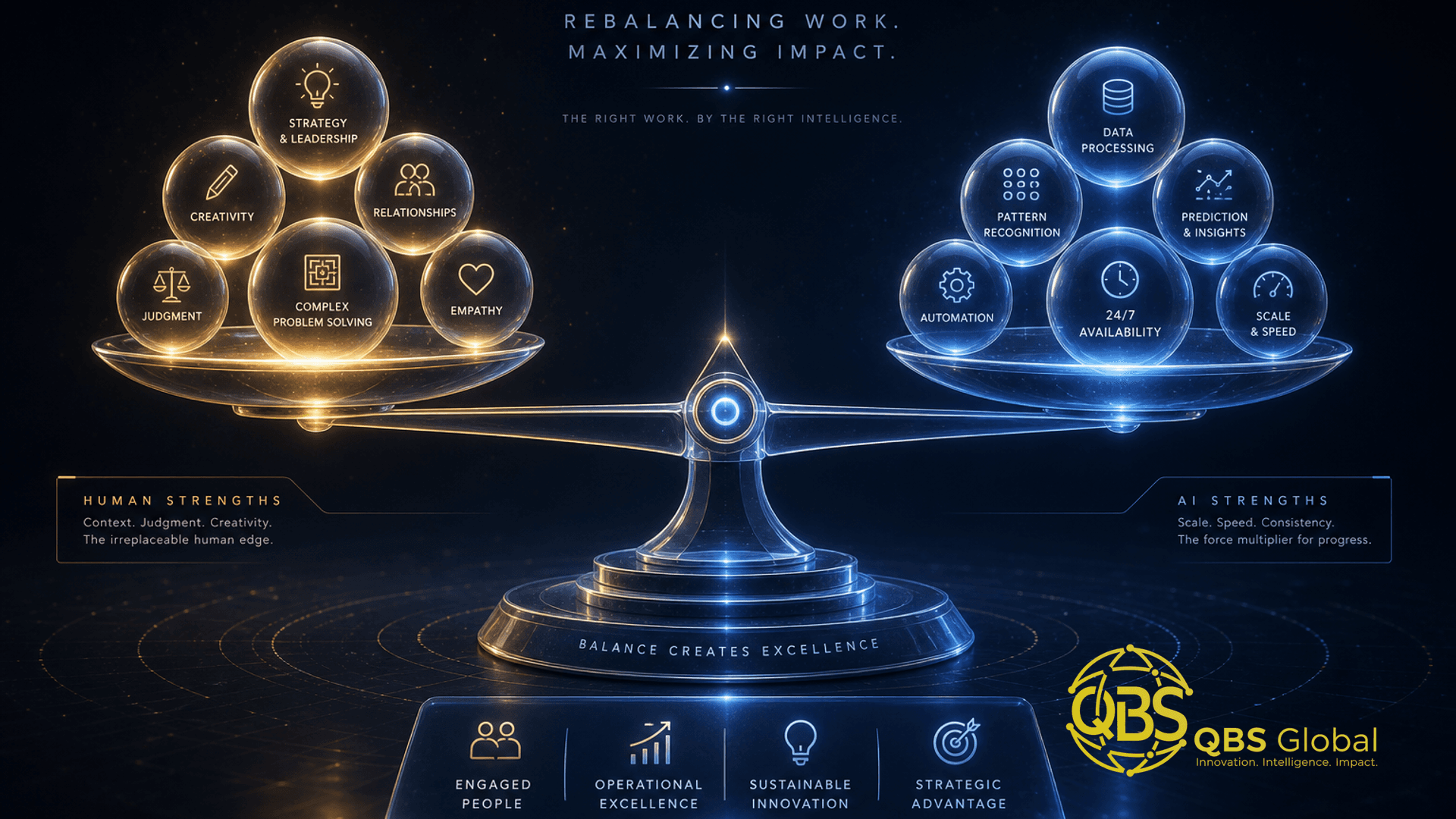
There is a clear principle behind this line, and it is backed by the bias research below: AI-only screening reproduces the bias in its training data, while human-only screening is slow and inconsistent at volume. Pairing AI's consistency with structured human oversight on every consequential decision is both the most accurate setup and the most legally defensible one. The hybrid model isn't a compromise — it's the point.
One more reason humans stay central: assessment integrity is getting harder. As AI-assisted interviewing spreads, so does AI-assisted cheating by candidates, which is why a human still needs to verify that the person you screened is the person who shows up and can actually do the work — see how to prevent AI interview cheating.
Bias and Compliance Traps With AI Screening
This is where small businesses get burned, because they assume "the vendor handles compliance." They mostly do not. If you deploy the tool, in several jurisdictions you are the one on the hook.
The bias is documented, not hypothetical. A 2024 University of Washington study tested three large language models on more than 550 real resumes and found they favored white-associated names 85% of the time, favored male-associated names over female-associated ones, and never preferred Black-male-associated names over white-male-associated ones (University of Washington). The mechanism is biased or unrepresentative training data, and it gets worse when a human rubber-stamps whatever the model returns — the well-documented "automation bias" failure mode. That is exactly what your human-review guardrail is meant to catch.
The regulation is real and already enforced. Two anchors to know:
- New York City Local Law 144 prohibits using an automated employment decision tool unless it has had a bias audit within the prior year, the audit summary is published, and candidates get advance notice — with enforcement that began July 5, 2023 and civil penalties of $500–$1,500 per violation per day (NYC DCWP).
- The EU AI Act classifies most recruitment AI as high-risk, which triggers transparency, record-keeping, and human-oversight obligations. The high-risk obligations were originally set to apply from August 2026, though a 2026 proposal may push that timeline later (Crowell & Moring, 2026 legal overview); the direction of travel is clearly toward mandatory disclosure and oversight.
Public sentiment compounds the risk: 66% of US adults say they would not want to apply for a job with an employer that uses AI to help make hiring decisions (Pew Research Center, 2023). Quietly running an opaque AED tool is both a legal and a talent-attraction risk, which is the practical case for disclosing AI use up front.
The small-business compliance checklist is short: disclose that you use AI in screening, keep a human decision on every rejection and offer, document your rubric and who reviewed what, prefer tools that publish bias-audit results, and never let the model make the final call. Most of this is just good hiring hygiene with a paper trail.
Build-Your-Own vs Outsource the Whole Screen
There are three ways to put this in place, and the right one depends almost entirely on your hiring volume.
| Approach | Best when | Trade-off |
|---|---|---|
| Buy a tool | You want results this week and hire occasionally | Fast and supported, but generic to your roles and you still own compliance |
| Wire up your own stack | You hire steadily and want it tuned to your roles | More control and lower cost at volume; you maintain the rubric and the plumbing |
| Outsource the screen | You hire in bursts or for hard-to-source roles, and have no recruiter | Someone runs sourcing + first-pass screening for you; less internal control, but no setup or upkeep |
The honest guidance: building a custom AI screener from scratch — training a model on your data — almost never pays off for a small business. It only makes sense at steady high volume or for a role so specialized no tool handles it. For nearly everyone else, the win is wiring together existing tools (the lean stack above) or having a partner run the workflow for you. This is squarely what our software and AI/automation service line does: we design and stand up the screening-and-scheduling workflow on tools you already pay for, set the guardrails, and hand it over — the busywork gets automated, you keep the judgment.
If your actual goal is reaching hires faster by changing what you screen for, not just how, there's a complementary move: skills-based hiring for small business replaces credential-matching with task-based evidence, which AI screening handles far more fairly than parsing job titles.
A First-30-Days Plan to Hire Faster on a Small Budget
You don't need a transformation program. You need one role, one rubric, and a wired-up funnel. Here's a realistic four-week run.
Week 1 — Define and instrument. Pick one open role. Write the screening rubric in plain language: 3–5 must-haves, 3–5 nice-to-haves, and your hard disqualifiers. Stand up the four-layer stack — tracker, AI screener, scheduler, automation glue. Add a one-line AI-use disclosure to your job post.
Week 2 — Automate the funnel. Wire the flow: application → AI scores it against your rubric → score and two-line summary land in your tracker → above-threshold candidates get an automatic scheduling link. Test it with five old resumes before any real applicant touches it. Confirm nothing auto-rejects.
Week 3 — Run it live with a human gate. Open the role. Let the AI handle sourcing outreach, screening, and scheduling. You do exactly two things: glance at the flagged low-scores (10 seconds each) and run the interviews. Track your time-to-first-response — this is where you'll feel the jump from days to hours.
Week 4 — Measure and tune. Compare this cycle to your last manual hire: time-to-shortlist, hours you personally spent, and shortlist quality. Adjust the rubric where the AI ranked someone wrong. Decide what to keep automated and what to pull back to human.
By day 30 you'll have a repeatable funnel and real numbers — not a 50% headline, but your numbers. For the broader hiring picture once you start adding people across borders, how to hire employees in Dubai in 2026 walks through the employment-model side that sits downstream of screening.
The bottom line: agentic AI is genuinely the recruiting story of 2026, but the advantage for a small team isn't the hype — it's that you can now run a serious, fair, fast hiring funnel for the price of a subscription, while the enterprise tools chase enterprise budgets. Automate the busywork, keep the judgment, document the process, and you're ahead of most companies ten times your size.
If you'd like a stack and workflow mapped to your specific roles and hiring volume, book a free 30-minute call with QBS Global and we'll send you a tailored AI-recruiting roadmap within 48 hours.
Frequently asked questions
What is agentic AI in recruiting?+
Agentic AI is software that completes multi-step recruiting work on its own — sourcing candidates, screening resumes, answering applicant questions, and booking interviews — instead of just suggesting one thing at a time. You set the criteria and guardrails, and it runs the repetitive funnel work while a human still makes the hiring decision.
Can a small business really use AI recruiting without a big budget?+
Yes. The expensive part used to be enterprise ATS suites priced for large teams, but in 2026 a lean stack of a low-cost applicant tracker, a general AI assistant for screening and drafting, a scheduling tool, and an automation layer like Zapier or n8n can be assembled for well under a few hundred dollars a month — far below the cost of a single bad hire.
How much faster does AI make hiring?+
Most of the speed comes from automating the two slowest stages — first-pass resume screening and interview scheduling — which together can shave days off time-to-first-response. Vendor and industry reports often cite large headline gains, but treat those as ceilings from high-volume teams; a small business should expect to move from a multi-day first response to a same-day or next-day one, which is the gain that actually matters.
Is it legal to use AI to screen job applicants?+
In most places yes, but with conditions. New York City's Local Law 144 requires a bias audit and candidate notice before using an automated employment decision tool, and the EU AI Act classifies most recruitment AI as high-risk with transparency and human-oversight duties. The safe path is disclosure, human sign-off on rejections and offers, and keeping records of how the tool was used.
Should a small business build its own AI screening or outsource it?+
Outsource or buy first. Building a custom screener only pays off at steady, high application volume or for a very specific role no tool handles well. Most small teams get faster results by wiring together existing tools, and bring in a partner to design that workflow rather than coding a model from scratch.
Will AI replace the recruiter or hiring manager?+
No. AI removes the administrative load — sourcing, first-pass screening, scheduling, status updates — but humans still judge motivation, culture fit, edge-case candidates, and the final decision. The most accurate and fairest setups combine AI with structured human review, not one or the other.