How to Stop AI Interview Cheating: A Hiring Process That Tests Real Skill (2026)
How to prevent AI interview cheating in 2026: why detection tools fail and a cheat-resistant hiring process that tests real, demonstrable skill.
If you have interviewed anyone in the last year, you have probably felt it: the candidate who answers a little too smoothly, whose eyes flick to a second screen, whose take-home assignment is flawless but who cannot explain a single line of it on a call. The search term "how to prevent AI interview cheating" spiked into the spotlight in 2026 because the problem stopped being theoretical. Fabric's analysis of 19,368 interviews run between July 2025 and January 2026 found that 38.5% of candidates were flagged for cheating behavior (Fabric). For technical roles the flag rate hit 48% (Fabric). When nearly half your candidates are getting AI help you cannot see, your interview is no longer measuring what you think it is measuring.
This is not a panic piece, and it is not a pitch for a detection gadget. It is an operator's framework for redesigning your hiring so AI assistance stops being an advantage. The honest-broker version up front: you cannot win this by watching candidates harder. You win it by changing what you ask them to do.
How candidates use AI to cheat interviews in 2026
The methods cluster into three buckets, and they are getting better fast.
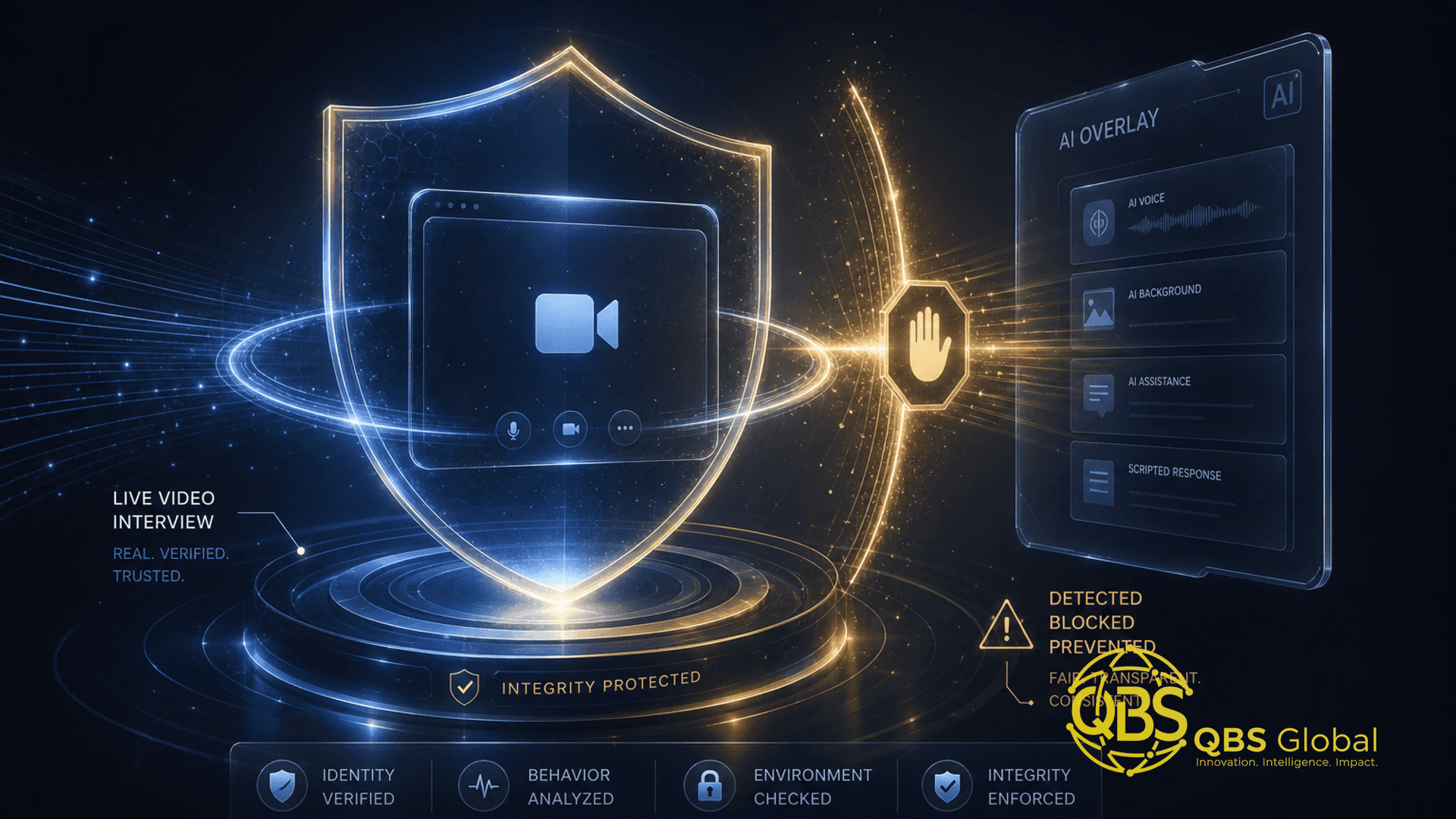
Real-time answer feeding. During a video interview, a candidate runs a hidden overlay or second device that pipes a ChatGPT-style answer onto their screen, which they read back lightly paraphrased. This is the fastest-growing form, and it is why behavioral and verbal interviews — long considered "AI-proof" — are now exposed too. A 21-year-old building exactly this kind of overlay drew national coverage in 2025 for helping coders pass interviews at Google and other tech firms (CNBC).
Unaided assessments that are quietly aided. Take-home assignments and code tests are the softest target because nobody is watching. One coding-interview company found that 80% of candidates used an LLM to complete a top-of-funnel code test even after being explicitly told not to (Karat). When four in five people ignore the rule, the rule is the problem.
Proxy and deepfake fraud. At the extreme end, the person on screen is not the person who applied. In a 2025 Gartner survey of 3,000 candidates, 6% admitted to participating in interview fraud — posing as someone else or having someone pose as them (HR Dive, citing Gartner). Gartner projects that by 2028, one in four candidate profiles worldwide could be fake (HR Dive, citing Gartner).
The uncomfortable backdrop: most candidates are willing. Interviewers feel it too — in an interviewing.io survey of FAANG interviewers, 81% said they suspect candidates are using AI to cheat, and about a third had actually caught someone (interviewing.io / Pragmatic Engineer). This is now the default condition of hiring, not an edge case you can wave away.
Why detection tools alone don't fix it
The instinct is to buy a detector — software that watches eye movement, flags tab switches, or scans written answers for AI fingerprints. Detection has a role, but as a strategy it fails for four structural reasons.
It is always one step behind. Every detector is built to catch yesterday's evasion. The overlay tools are explicitly designed to be invisible to screen-share and proctoring, and a phone held just off-camera defeats most of them entirely. You are paying to be perpetually outdated.
False positives punish honest people. A nervous candidate who looks away to think, a non-native speaker who pauses, a neurodivergent applicant who does not hold eye contact — these get flagged as "suspicious." Accusing a good candidate of cheating is worse than missing a bad one; it costs you talent and reputation.
Adoption is low because trust in it is low. Only about 11% of FAANG interviewers said their company uses cheating-detection software (interviewing.io / Pragmatic Engineer). The teams closest to the problem are not betting on detectors — they are changing the interview.
It treats a process problem as a surveillance problem. If your assessment can be aced by reading an AI's output aloud, the assessment is the weak point. No amount of watching fixes a test that rewards the wrong thing.
| Approach | What it does | Where it breaks |
|---|---|---|
| Detection software | Flags eye movement, tab switches, AI-pattern text | Defeated by off-camera phones; false positives; always lagging |
| Honor-system AI ban | Asks candidates not to use AI | Most use it anyway; around 80% ignored an explicit code-test ban |
| Process redesign | Tests skill AI cannot fake on the candidate's behalf | Takes effort to design; this is the durable fix |
Detection is a backstop. The real work is in the third row.
Redesigning interviews to test real, demonstrable skill
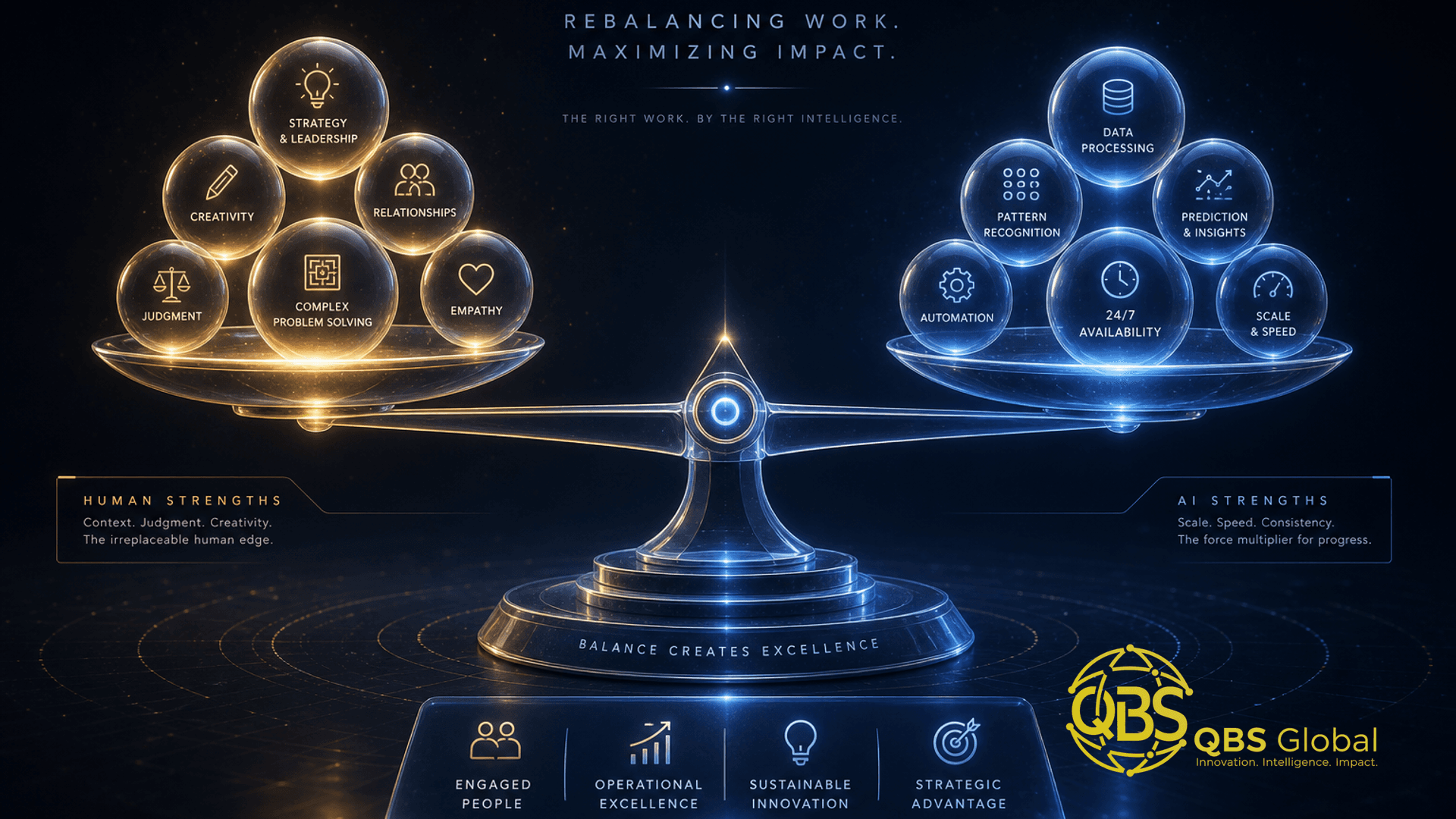
Here is the mental shift: stop asking "is this person using AI?" and start asking "can this person do the job, with or without AI?" If your interview measures demonstrable skill on a real task, AI assistance becomes either useless or, in some roles, exactly the skill you want to measure.
Make them explain, not just produce. AI is excellent at producing an answer and terrible at defending one it did not actually reason through. Ask the candidate to walk you through why they made a choice, what they would do differently, and what breaks if a key assumption changes. Read-aloud answers collapse under the second and third follow-up.
Use real, slightly messy problems. Textbook questions have textbook answers an LLM has memorized. A real problem from your actual work — ambiguous, with missing information and a tradeoff — forces genuine reasoning. Ask the candidate what they would clarify before starting; that question reveals more than any answer.
Decide your AI stance per role and state it. For a role where directing AI well is the job (most knowledge work in 2026), allow AI openly and test how the candidate prompts, critiques, and corrects it. For a role that requires unaided judgment, build the assessment so AI cannot do the thinking for them. Either way, say it out loud. A clear, enforced rule beats a vague ban everyone ignores. This is the same logic behind skills-based hiring for a small business: you are hiring for what someone can demonstrably do, not for credentials or polish.
Verify identity early. Against proxy and deepfake fraud, a brief live conversation that ties the on-screen person to their application — a quick reference to specifics in their own resume, a casual unscripted exchange — catches most impersonation before you invest hours.
Work-sample and proof-of-work assessments that resist AI
The single most cheat-resistant tool is a work sample: a short, realistic task that mirrors the actual job, followed by a live conversation about it. Decades of hiring research rank work-sample tests among the strongest predictors of on-the-job performance, and in the AI era they have a second virtue — they are very hard to fake your way through.
The structure that works:
1. A short, paid trial task. Give a small slice of real work — a two-to-four-hour task, paid, on a realistic problem. Paying signals seriousness, widens your pool to people who will not work for free, and lets you judge actual output instead of interview theater.
2. A live walkthrough of their own work. This is the part AI cannot survive. The candidate presents what they built and you probe: Why this approach? What did you reject? What would you change with more time? Someone who let an AI do the task cannot narrate decisions they never made. Someone who did it themselves lights up.
3. A live curveball. Mid-walkthrough, change a requirement: "What if the input doubled?" Real skill adapts in the moment. Borrowed skill freezes.
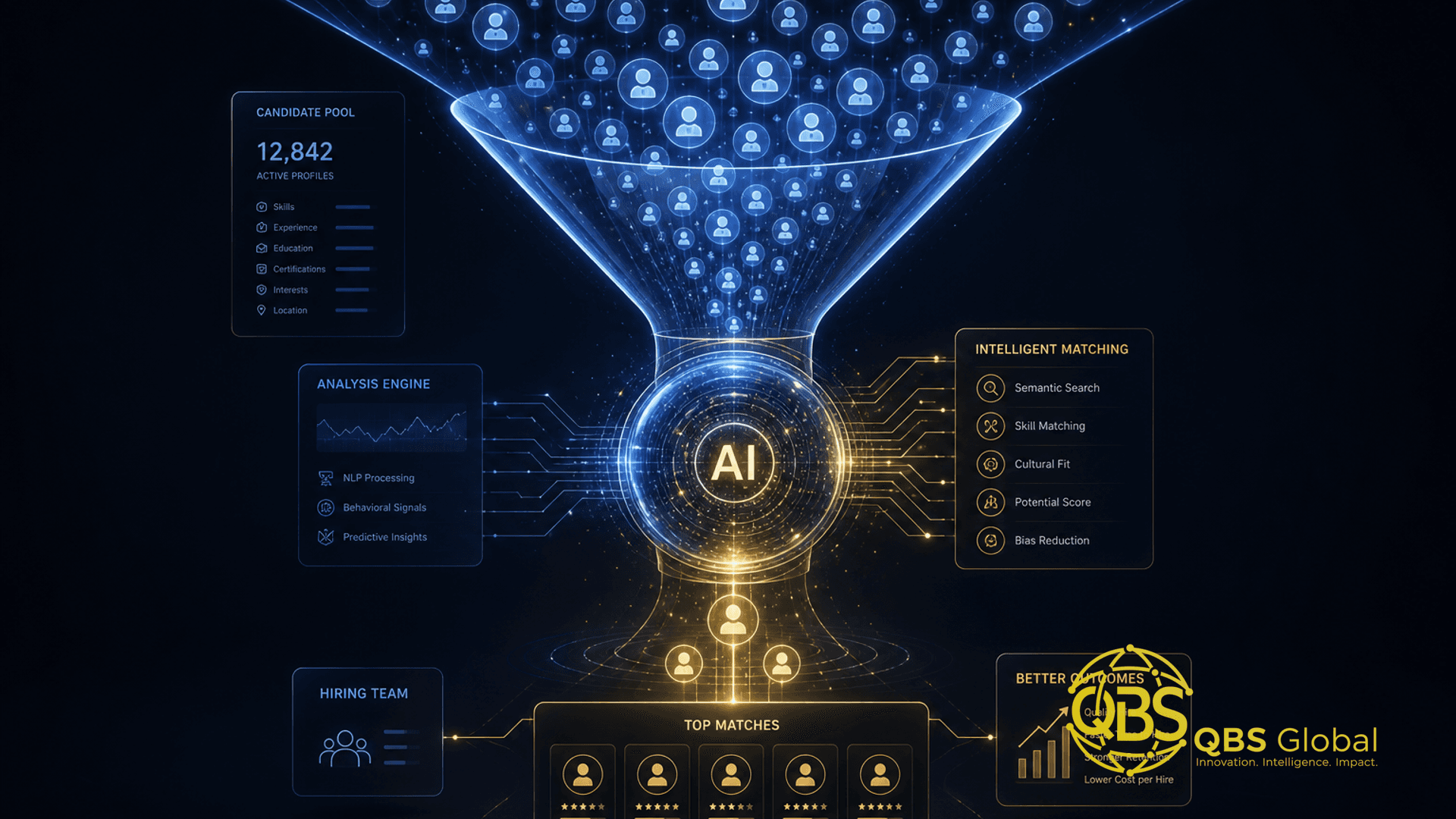
This is also where well-designed AI for recruiting at a small business earns its place — not to detect cheating, but to handle the volume around the work sample. Let automation source, schedule, and send the trial task so your scarce human attention goes entirely to the live walkthrough, which is the part that actually separates real skill from borrowed answers.
One caution: an unaided take-home with no live discussion is the worst of both worlds — high candidate effort and easily AI-completed. The live walkthrough is non-negotiable. Without it, you have just outsourced your test to ChatGPT.
Structured scoring that's hard to game
Even a great work sample fails if scoring is a vibe. "Strong communicator," "seemed sharp," "good culture fit" — these gut reactions are exactly what a smooth AI-fed answer is engineered to trigger. Structure is the antidote.
Define the rubric before the interview. List the three to five competencies the role actually requires, with concrete anchors for what a 1, 3, and 5 looks like on each. Write them down before you meet anyone, so the standard is fixed and not bent to fit a candidate you already like.
Ask every candidate the same core tasks. Consistency is what makes scores comparable and bias visible. A standardized core also makes anomalies obvious — the candidate who is flawless on the polished take-home but a 2 on the live curveball is telling you something.
Score the reasoning, not the polish. Award points for how a conclusion was reached — tradeoffs named, assumptions surfaced, the curveball handled — not for fluency. AI maximizes polish. A reasoning-weighted rubric quietly defangs it, because the points live in exactly the place AI-fed answers are weakest.
Use more than one scorer where you can. Two independent scores on the same rubric catch each other's blind spots. If you genuinely have no second person, score the recording later, cold, against the rubric — separating "did I like them" from "did they meet the bar."
A structured rubric does double duty: it makes hiring fairer and makes cheating harder, because there is no soft, impressionable target for a rehearsed answer to hit.
A cheat-resistant process for a team with no recruiter
Most of the advice online assumes a recruiting department. If you are a founder or operator hiring between everything else, here is a lean process you can actually run.
Step 1 — Screen for signal, not keywords. Resumes are now AI-generated and resemble each other. Skip the resume beauty contest. Open with one specific, role-relevant question that needs a real answer — ideally answered live or by short video, not in a polished document an LLM wrote.
Step 2 — Run a short, structured live conversation. Fifteen to twenty minutes, same questions for everyone, focused on a real situation from the job. You are listening for specifics and lived reasoning, not rehearsed fluency. Vague, over-smooth answers that dodge detail are the tell.
Step 3 — Send one paid work-sample task. A small, realistic, paid task. Keep it tight so good candidates actually do it.
Step 4 — Hold the live walkthrough. The highest-signal, most cheat-resistant 20 minutes in your whole process. They explain their work; you probe and add a curveball.
Step 5 — Score against the rubric, then decide. Fill the rubric immediately after each stage while it is fresh. Compare scores, not memories.
| Stage | Time per candidate | Catches |
|---|---|---|
| Signal screen (1 live question) | 5 min | AI-polished resumes; generic applicants |
| Structured live conversation | 15–20 min | Rehearsed and read-aloud answers; identity mismatch |
| Paid work sample | Review only | Whether real output meets the bar |
| Live walkthrough + curveball | 20 min | Outsourced work; borrowed reasoning |
| Rubric scoring | 5 min | Gut-feel bias; inconsistency |
This is roughly an hour of focused human time per finalist — and it is far more cheat-resistant than five rounds of unstructured chat. If you also hire across borders, fold compliance in early; an MOHRE compliance hiring guide for 2026 and the equivalent rules in each market matter as much as skill once you make an offer.
When to outsource screening to a partner
Doing this well takes time and a bit of skill you may not have in-house. Outsourcing the top of the funnel is the right call when:
- You have no recruiter and hire only occasionally — building and maintaining a cheat-resistant process for two hires a year is not worth your time.
- You cannot judge the domain yourself — if you are hiring a skill you do not personally have, a partner who can run a credible work sample protects you from confidently hiring the wrong person.
- You are hiring at volume or across time zones — structured screening at scale is a specialist job; doing it ad hoc burns your week.
- Speed matters more than control — a partner can run verified, structured screening in parallel while you focus on closing.
The point of outsourcing is not to hand off judgment — it is to hand off the funnel so your team only ever spends time on a short, verified shortlist that has already survived a work sample and a live walkthrough. Done right, that costs a fraction of one bad hire's salary, ramp time, and eventual exit.
This connects to a broader build-versus-buy question as hiring tooling proliferates. If you are comparing platforms and partners, a grounded look at the tradeoffs — like this Rekroot vs Bayt ATS comparison for the UAE — is a useful reference for what "buy" actually includes. The deciding question is simple: where is your scarce attention best spent — designing the screen, or talking to the three people who already passed it?
The teams that handle AI interview cheating best in 2026 are not the ones with the cleverest detector. They are the ones who quietly accepted that candidates will use AI, and redesigned hiring so it no longer matters — testing demonstrable skill on real work, scored the same way every time. That is a process you can build, and it pays off whether or not a single candidate ever opens ChatGPT.
If you would like a second set of eyes on your own hiring funnel, we are happy to help. Book a free 30-minute call with QBS Global and we will map a cheat-resistant, skills-first screening process tailored to your roles — with a clear roadmap back to you within 48 hours.
Frequently asked questions
How do candidates cheat in AI-era interviews?+
The common methods are a hidden second screen or overlay tool that feeds ChatGPT-style answers in real time during video calls, an LLM completing take-home and code tests that were meant to be unaided, and at the extreme end a proxy or deepfake where someone other than the real candidate answers. Fabric's analysis of 19,368 interviews found 38.5% of candidates flagged for cheating behavior, so this is now mainstream, not fringe.
Can AI cheating detection tools actually catch it?+
Only partially, and never on their own. Detection tools flag eye movement, tab switches, and AI-pattern text, but they miss a phone held off-camera, produce false positives that wrongly accuse honest people, and are always a step behind new evasion methods. Only about 11% of FAANG interviewers report their company even uses detection software. Treat detection as a backstop, not the strategy.
What is the best way to prevent AI interview cheating?+
Redesign the process so that AI assistance stops being an advantage. Use live, conversational work samples where the candidate explains and defends their own decisions, score with a structured rubric multiple people apply the same way, and weight a paid trial task over polished interview answers. A process that tests demonstrable skill is far harder to game than any detector.
Should small teams just ban AI from interviews?+
An honor-system ban does not work, because most candidates will use AI if they think they can get away with it. A better approach for some roles is to allow AI openly and then test how well the candidate directs, critiques, and improves on its output, since steering AI well is itself a real on-the-job skill. Either way, the assessment must require thinking the candidate cannot outsource.
Do work-sample tasks really resist AI cheating better than interviews?+
Yes, when designed right. A short paid trial on a realistic, slightly messy problem, followed by a live walkthrough where the candidate explains their choices and handles a curveball, exposes whether the skill is real. AI can produce an answer, but it cannot fake a candidate's lived reasoning about a specific, ambiguous task under follow-up questioning.
When should a company outsource screening instead of fixing it in-house?+
Outsource screening when you have no recruiter, hire only occasionally, lack the in-house skill to judge a domain, or are filling roles fast across time zones. A screening partner runs structured, cheat-resistant assessments at volume so your team only spends time on a short, verified shortlist, which is usually cheaper than the cost of one bad hire.