Skills-Based Hiring for Small Teams: How to Assess Talent When Degrees No Longer Predict Performance
A practical guide to skills based hiring for small business: work-sample tests, structured interviews, and a no-HR-team workflow you can run now.
Search interest in "skills based hiring" has been climbing for two years, and in 2026 it finally went from buzzword to default — the term is near the top of its range in the US right now. Two forces are driving it. Employers keep stripping four-year-degree requirements off job postings, and generative AI has quietly scrambled the old shortcuts — a polished resume, a brand-name school, even a confident interview answer can now be produced by a tool in seconds.
For a small team, that is both a problem and an opening. You can no longer trust the proxies. But you also do not need a recruiting department to do this well — you need a repeatable way to watch someone do the work before you hire them. This guide gives you that: the why, the assessment methods that actually predict performance, and a no-HR-team workflow you can run this month.
Why Degrees Stopped Predicting Performance in 2026
The shift away from degrees is not a fad — it is a long, documented reset. The Burning Glass Institute and Harvard Business School's Project on Managing the Future of Work projected that an additional 1.4 million jobs could open to workers without college degrees over five years as employers reset requirements that had crept upward for a decade. The logic is simple: a degree requirement summarily disqualifies roughly two-thirds of Americans — 62 percent — who lack one, and in a tight labor market that filter became too expensive to keep.
But here is the honest-broker part most articles skip. The same Harvard and Burning Glass research found that announcing you dropped degree requirements and actually changing how you hire are two different things — "sustained hiring changes remain elusive for most," as their 2024 follow-up put it. Plenty of companies updated their job ads and then kept hiring exactly as before, defaulting to the same resumes and the same gut calls.
That gap is your advantage. Big employers have the announcement; most have not built the assessment muscle. A small team that actually tests for skill can out-hire companies ten times its size, because you are competing for the candidates the degree filter would have thrown away.
The takeaway: degrees were always a proxy. In 2026, with AI inflating resumes and credentials, the proxy is broken — so measure the thing itself.
What Skills-Based Hiring Actually Means in Practice
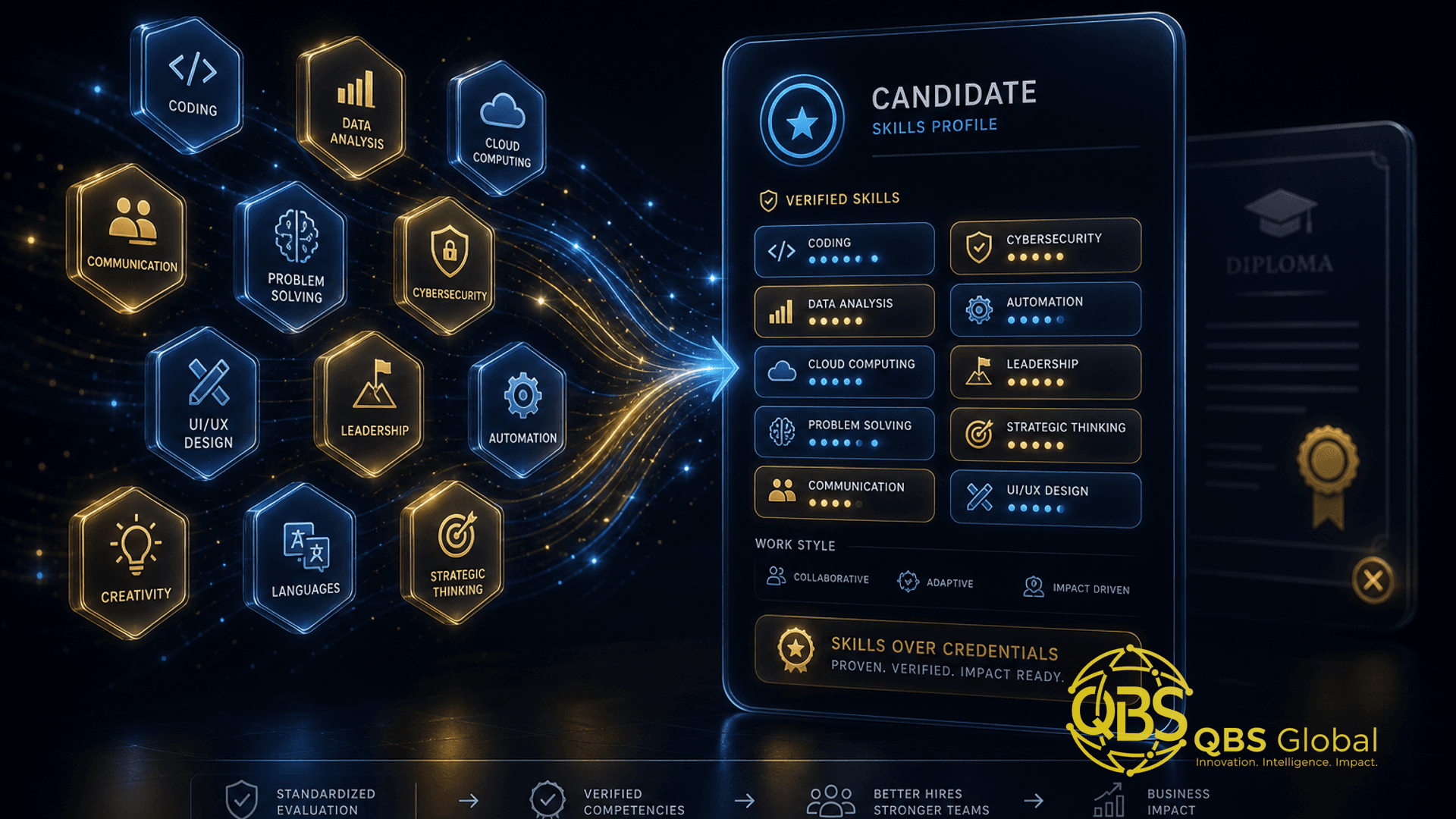
Skills-based hiring is not "ignore degrees and hope." It is a specific swap: you replace credential and resume screening with direct evidence that the person can do the job. Everything else follows from that one move.
In practice, for a small business, it means three concrete changes:
- You define the job as a list of observable skills, not a list of qualifications. Not "5 years experience, marketing degree" but "can write a cold email that gets replies, can read a campaign dashboard and tell me what to cut."
- You collect a sample of the work before the offer — a short task, a take-home, or a live exercise that mirrors a real piece of the role.
- You score everyone the same way against a rubric you wrote in advance, so the decision rests on evidence, not on who reminded you of yourself.
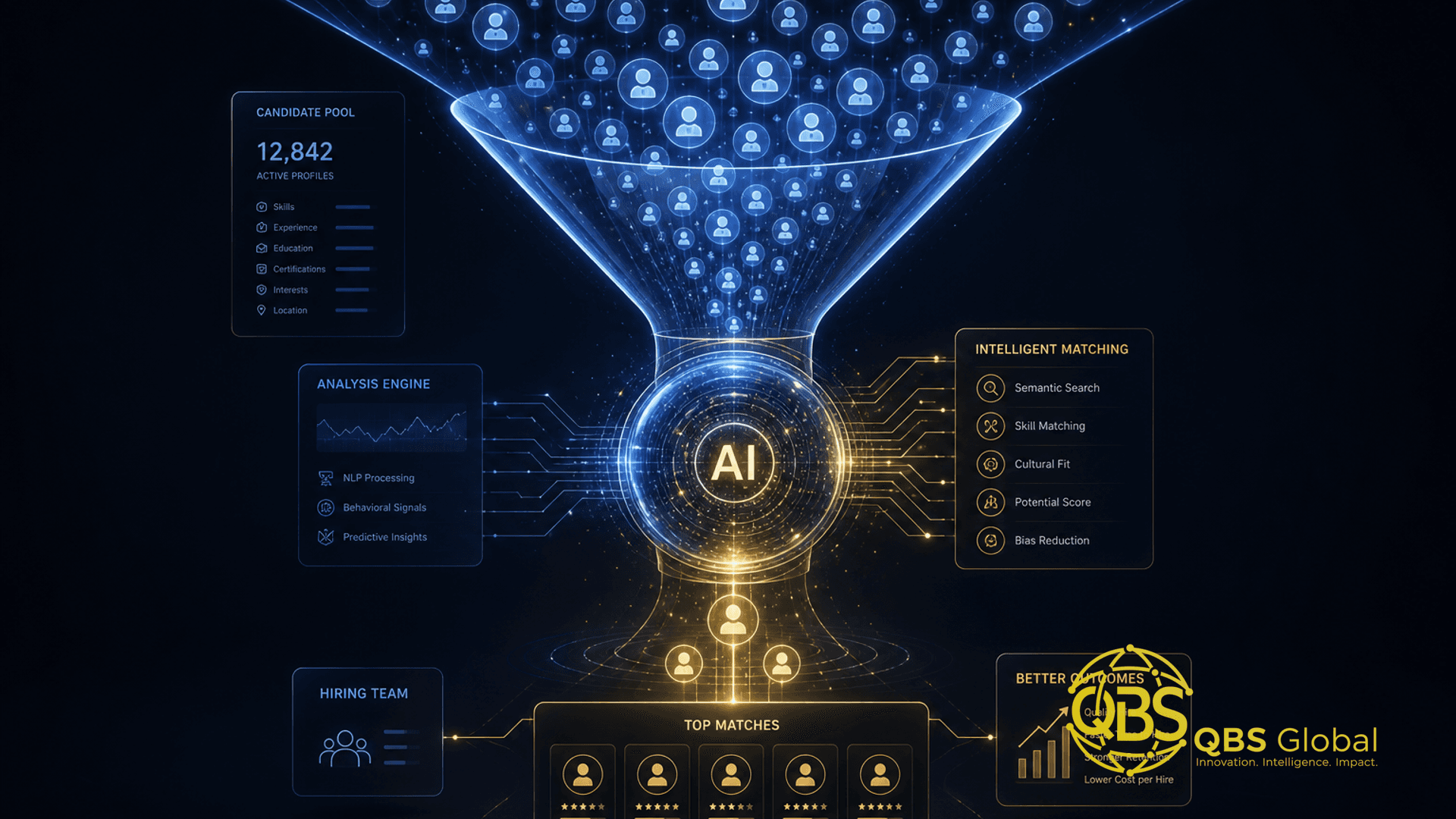
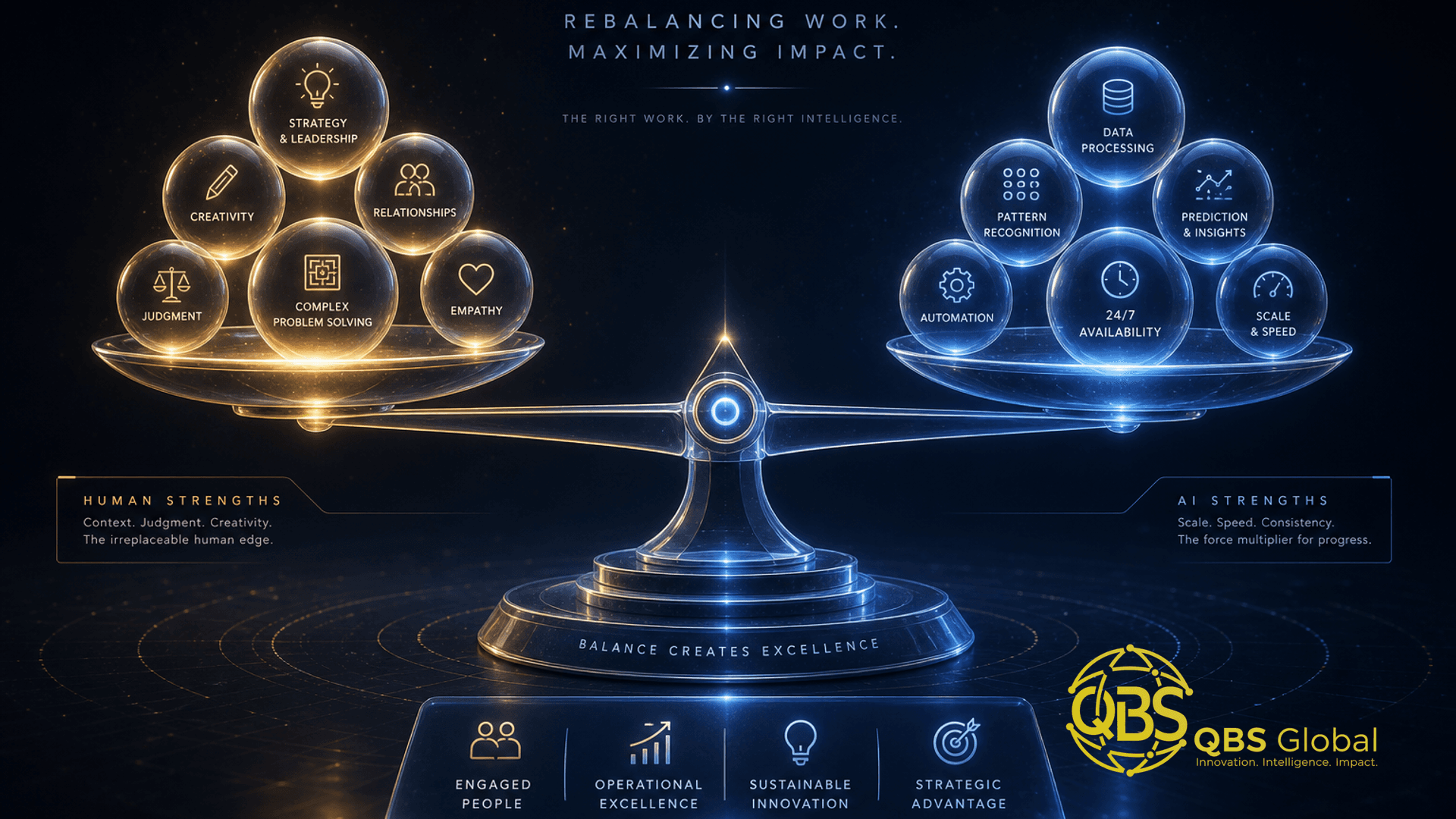
Crucially, skills-based hiring does not mean dropping standards or skipping the human. It means moving the human judgment to where it is reliable — evaluating real work — and away from where it is weak, like guessing potential from a CV. It also pairs naturally with AI tools that handle the busywork (parsing applications, scheduling, drafting rubrics) while you keep the judgment.
One more reality of the AI era: because candidates now use the same tools you do, you have to design assessments that are hard to fake. That is its own discipline — we cover the tactics in depth in how to prevent AI interview cheating.
Designing Work-Sample Tests for Non-Technical and Technical Roles
A work-sample test is the single highest-leverage tool in this whole approach. The reason is not opinion — it is one of the most replicated findings in personnel research. The landmark Schmidt and Hunter meta-analysis of 85 years of selection studies found work-sample tests among the strongest single predictors of job performance, with a general-mental-ability-plus-work-sample combination reaching a mean validity of around .63 — roughly tied for the top of the list. (Later re-analysis by Sackett and colleagues in 2022 revised some of these coefficients downward under stricter corrections, so treat the exact decimals as directional, not gospel — but work samples and structured interviews remain at the top regardless.)
The design principle is the same for every role: shrink a real piece of the job into 30 to 90 minutes and watch how they do it.
Here is how that looks across role types:
| Role | A good work-sample task | What you are scoring |
|---|---|---|
| Customer support | Reply to two real (anonymized) tickets, one of them angry | Tone, accuracy, judgment on when to escalate |
| Sales / SDR | Write a cold email and a follow-up to a sample prospect | Clarity, relevance, hook, no fluff |
| Bookkeeper / ops | Reconcile a short messy spreadsheet, flag three issues | Accuracy, attention to detail, what they catch |
| Marketer | Audit one landing page, list the three highest-impact fixes | Prioritization, reasoning, not just opinions |
| Developer | Fix a small bug in a real (sanitized) snippet, or extend a function | Code quality, debugging approach, communication |
| Designer | Redesign one screen or section with a written rationale | Craft, problem-framing, decision-making |
Three rules keep work samples fair and effective:
- Keep it short and pay for real effort. Anything past about an hour should be paid. Long unpaid take-homes are the fastest way to lose your strongest candidates, who have other options.
- Use real, sanitized material. The closer the task is to actual work, the more predictive it is — and the harder it is to fake with a generic AI prompt.
- Write the rubric first. Decide what a strong, average, and weak answer looks like before anyone submits. This is what turns a "gut feel" into a score.
The takeaway: if you only adopt one thing from this article, make it a paid 60-minute work sample for every shortlisted candidate.
Structured Interviews vs Take-Homes for a Small Team
You will hear "structured interviews vs take-homes" framed as a choice. It is not — they measure different things and the strongest small-team process uses both, lightly.
A structured interview simply means you ask every candidate the same questions in the same order, and score the answers against a rubric. That sounds obvious, but most small companies run unstructured interviews — a different freewheeling chat each time — and the research is brutal on that habit. Structured interviews predict performance dramatically better than unstructured ones; the combination of general mental ability and a structured interview reaches roughly .63 mean validity in the Schmidt-Hunter data, while the casual "let's just talk" interview sits well below it.
Here is how to choose what to use where:
| Work-sample take-home | Structured interview | |
|---|---|---|
| Best at measuring | Can they do the actual work | How they think, communicate, handle ambiguity |
| Fakeable with AI | Harder if task is specific and live | Easy if questions are generic; harder if you probe |
| Candidate time cost | Medium to high (pay it) | Low |
| Your time cost | Low to grade | Medium (you sit in) |
| Use it to | Filter on competence | Confirm judgment, motivation, communication |
For a team with no recruiter, the lean sequence is: short screen → paid work sample → one structured interview → reference or trial. The work sample does the heavy filtering so you only spend interview time on people who already proved they can do the job. To probe judgment in the interview without inviting rehearsed answers, ask about a decision in their work sample ("walk me through why you escalated that ticket") — it is specific, hard to fake, and tells you more than any "greatest weakness" question.
If you are leaning on AI tools to run the recruiting funnel itself — parsing applications, scheduling, first-pass screening — we walk through the practical stack in AI for recruiting in small business.
Avoiding Bias While Staying Lightweight
The fear with a small, informal process is that it is also a biased one. It can be — but fairness here comes from consistency, not from a thick HR policy. Three habits do most of the work:
- Write the rubric before you meet anyone. When the standard exists before the candidates do, you cannot quietly move the goalposts to fit the person you already liked.
- Same questions, same order, same task — for everyone. Variation is where bias hides. A structured process is, almost by definition, a fairer one.
- Score work samples blind where you can. Strip names and obvious identity signals from submissions before grading. It is a two-minute habit that measurably reduces the influence of who someone appears to be.
A bonus: this consistency is exactly what makes a process defensible if a rejected candidate ever questions it. "Everyone did the same scored task against the same rubric" is a far stronger position than "I had a good feeling about the other person." You get fairness and legal hygiene from the same lightweight discipline — no HR department required.
The takeaway: bias control for a small team is three habits, not a binder. Rubric first, same process for all, blind-score the work.
A Done-With-No-HR-Team Hiring Workflow
Here is the whole thing as a repeatable, founder-runnable workflow. Build it once, reuse it for every hire.
- Write a skills-first job post. List 4 to 6 observable skills and drop the degree line unless it is genuinely required by law or a client. Say what the person will actually do in week one.
- Build a one-page scorecard. For each skill, define what "strong / okay / weak" looks like. This is your rubric for everything downstream. (15 minutes, reused forever.)
- Screen fast and cheap. A short form or 10-minute call that filters on hard requirements only (timezone, work authorization, must-have skill). Do not over-interview here.
- Send one paid work sample. 30–90 minutes, real sanitized task, clear instructions. Pay anything over an hour. This is your main filter.
- Grade against the rubric — blind if possible. Score the work before you look at the resume or the name. Shortlist the top two or three.
- Run one structured interview. Same questions for all, including one that digs into a choice they made in the work sample. Score it.
- Do a reference or a short paid trial. A reference check or a few days of real paid work confirms what the assessment suggested.
- Decide on the total score, then make the offer. The candidate with the strongest evidence wins — not the one you clicked with.
This entire loop runs without a recruiter, and most of it (the post, the scorecard, the screen, the rubric) is built once and reused. The repeatable parts — scheduling, application parsing, sending and collecting work samples — are exactly the kind of busywork worth automating, which is the whole idea behind using AI in the recruiting funnel.
If you are hiring across borders or in a specific market, the assessment is only half the job — you also have to employ the person compliantly. For that side, see our guides on how to hire employees in Dubai in 2026 and the difference between EOR vs staff augmentation vs PEO as employment models.
When to Outsource the Screening and Assessment
Running this yourself is the right call for your first few hires — it forces you to define the role precisely, and you learn what "good" looks like. But there is a point where doing it all yourself stops being thrift and starts being a bottleneck. Outsource when:
- Sourcing and first-round screening eat more than a day a week. Your time is better spent on the final judgment than on funnel management.
- You are hiring for a skill you cannot personally judge. If you cannot tell a strong submission from a weak one, you need either a trusted expert to grade or a partner who can.
- You are hiring across borders. Now you need sourcing, assessment, and compliant employment — and stitching three vendors together is rarely worth it for a small team.
- The hire is urgent and the cost of a mis-hire is high. A structured external funnel that hands you a ranked shortlist gets you to a confident yes faster.
What you should never outsource is the final decision and the scorecard standard — those encode what your business actually values, and they have to stay with you. A good service partner runs the funnel and the structured assessment, then hands you two or three candidates with their scored work attached. You make the call in an hour, not a month. That division of labor — partner does the busywork, founder keeps the judgment — is the entire point.
This is the model we run for clients on the global hiring and staff-augmentation side: sourcing, skills-based assessment, and compliant employment as one managed flow, so a founder gets a vetted, ready-to-start hire without building a recruiting function.
If you want a second pair of eyes on your specific role and a hiring workflow tailored to it, book a free 30-minute call with QBS Global — we will map a skills-based process you can run for this hire and reuse for the next ten, and you will have a concrete roadmap within 48 hours.
Frequently asked questions
What is skills-based hiring for a small business?+
Skills-based hiring means you assess whether a candidate can actually do the job — through a paid work sample, a structured interview, or a short test — instead of screening on a degree or a job-title resume. For a small team it usually means one realistic task plus a same-questions-for-everyone interview, scored against a rubric you wrote before anyone applied.
Do I need an HR team to run skills-based hiring?+
No. The whole point of the model is that it replaces gut-feel and credential filters with a repeatable process a founder or operator can run alone. You need a one-page scorecard, one work-sample task, and the same three or four interview questions for every candidate — all of which you can build in an afternoon and reuse for every future hire.
What is a work-sample test and why does it predict performance better than interviews?+
A work-sample test asks a candidate to do a small, realistic version of the actual job — fix a bug, draft a reply to an angry customer, build a one-slide plan. Decades of selection research found work samples among the strongest single predictors of on-the-job performance because you are measuring the work itself, not a candidate's ability to talk about the work.
How long should a work-sample test be for a small company?+
Keep it to 30 to 90 minutes of candidate effort, and pay for anything that crosses about an hour. Short, scoped tasks respect the candidate's time, keep your drop-off rate low, and still give you a far more reliable signal than a one-hour chat. Long unpaid take-homes are the fastest way to lose your best applicants.
How do I avoid bias in skills-based hiring without a big HR process?+
Three lightweight habits cover most of it: write the scoring rubric before you see any candidates, ask every candidate the same questions in the same order, and score the work sample blind where you can by stripping names from the submission. Consistency, not paperwork, is what keeps the process fair and defensible.
When should a small business outsource screening and assessment?+
Outsource the funnel when sourcing and first-round screening are eating more than a day a week, when you are hiring in a skill you cannot judge yourself, or when you are hiring across borders and need someone to handle assessment plus compliant employment. A service partner can run sourcing, work-sample design, and structured screening, then hand you a short ranked shortlist to make the final call on.