LinkedIn Lead Generation Without Ads: A Founder-Led Playbook for B2B Service Firms
A founder-led playbook for LinkedIn lead generation without ads — the organic system B2B service firms use to book calls, step by step.
Most "LinkedIn lead generation" advice ends with the same instruction: open Campaign Manager and load a credit card. But the firms quietly booking calls every week are rarely the ones spending on ads. They are founders posting a few times a week, replying to the right comments, and starting honest conversations in the DMs. No agency, no media budget, no funnel software.
This is the full system — the same one a solo founder or a small service team can run themselves. It is built for the reality that B2B buyers do most of their homework before they ever talk to you, so your job is to be visible, credible, and easy to start a conversation with. Below is exactly how to do that, step by step, without a single paid impression.
Why organic LinkedIn still out-converts ads for service firms
LinkedIn dominates B2B social by a wide margin. Roughly 80% of all B2B leads sourced from social media come from LinkedIn, according to data compiled from multiple industry sources. And it is not just reach — 62% of marketers say LinkedIn generates leads for them, more than twice the next-highest social channel, while 40% rate it the single most effective channel for high-quality leads, per Sopro's roundup of LinkedIn statistics.
For a service firm, the organic side specifically wins for three reasons.
First, buyers are already doing the work alone. Gartner's research on the B2B buying journey found buyers spend just 17% of their total purchase time meeting with potential suppliers, and around 27% researching independently online (Gartner, via Growth Method). They are forming opinions about you long before any sales conversation. Organic content is how you show up during that quiet 27% — ads usually do not.
Second, services are bought on trust, not clicks. Nobody hires a development partner, a fractional PM, or a hiring team off a single ad. They hire the person whose thinking they have watched for a few weeks and decided is competent and honest. Ads can buy attention; only consistent, founder-led content earns the trust a service sale requires.
Third, it is the highest-ROI channel you control. Paid LinkedIn gets expensive fast, and the moment you stop paying, the leads stop. An organic audience and a warm DM habit keep producing conversations after you log off. The table below frames the trade-off honestly.
| Factor | LinkedIn ads | Founder-led organic |
|---|---|---|
| Upfront cash | High, ongoing | Roughly zero |
| Time to first leads | Days | 3 to 6 weeks |
| Trust built with buyer | Low | High |
| What happens when you stop | Leads stop immediately | Past content keeps working |
| Best fit | Scaling a proven offer fast | Founder-led service firms, any stage |
Bottom line: Ads rent attention. Organic builds an asset. For a service firm selling trust, the asset wins.
The founder-led positioning that makes posts work
Before you write a single post, fix your positioning — because content from a vague "we do everything" company page gets ignored, while content from a specific human with a clear point of view gets read.
Post from your personal profile, not the company page. People follow people. A founder's face and voice will out-reach a logo every time, and on LinkedIn the personal feed is where the conversations and DMs actually happen.
Lead with the buyer's problem, not your service menu. Your positioning is a single sentence: who you help, with what painful problem, and the change you create. For example, "I help service-business founders stop drowning in busywork by automating the repetitive parts of their operations." That is specific enough that the right person reads it and thinks "that's me."
Pick a narrow point of view and repeat it. You do not need ten opinions; you need one or two you will defend for a year. If your edge is automating the busywork so a lean team can punch above its weight, then almost every post should ladder up to that idea — through stories, examples, mistakes, and small how-tos. Repetition is not boring; it is what makes you known for something.
Make your profile a quiet landing page. Your headline should name the buyer and the outcome, not your job title. Your "About" section should read like a short, honest pitch. Your featured section should hold one or two proof pieces — a useful breakdown, a results post, a simple offer. When your posts work, people click your profile next; treat it as the page that turns a curious reader into a conversation.
Building a simple content engine (no agency needed)
You do not need an agency or a content calendar with forty columns. You need a repeatable way to turn your own expertise into a few good posts a week.
Start from what you already know
The best service content is just your real work, narrated. Keep a running notes file and capture: a question a client asked this week, a mistake you see buyers make, a before/after from a project, a strong opinion about how your industry works. Each of those is a post. You are not inventing content — you are writing down what you already say on calls.
Use a small number of repeatable post types
Rotate through a handful of formats so you never stare at a blank page:
| Post type | What it does | Example angle |
|---|---|---|
| Problem/insight | Builds authority | "Most onboarding chaos isn't a people problem — it's a process you never wrote down." |
| Story/lesson | Builds trust | "We almost lost a project to scope creep. Here's the one change that fixed it." |
| How-to / framework | Demonstrates competence | "The 4 steps we use to automate a client's intake busywork." |
| Contrarian take | Sparks comments | "Hiring a bigger team rarely fixes a delivery problem. Here's what does." |
| Soft proof | Warms up buyers | "A founder told me they got 6 hours a week back. Here's exactly what we automated." |
Aim for two to five posts a week. That range is the proven sweet spot: an analysis of over two million LinkedIn posts found that moving from one post a week to two-to-five delivers roughly 1,182 more impressions per post (Buffer). For most founders, three solid posts a week plus daily commenting is plenty.
Write so a busy operator actually reads it
Open with a sharp first line — it is the only thing most people see before "see more." Keep paragraphs to one or two lines. Cut jargon. End with a light question that invites a reply, because comments and replies are what tell the algorithm to keep showing your post.
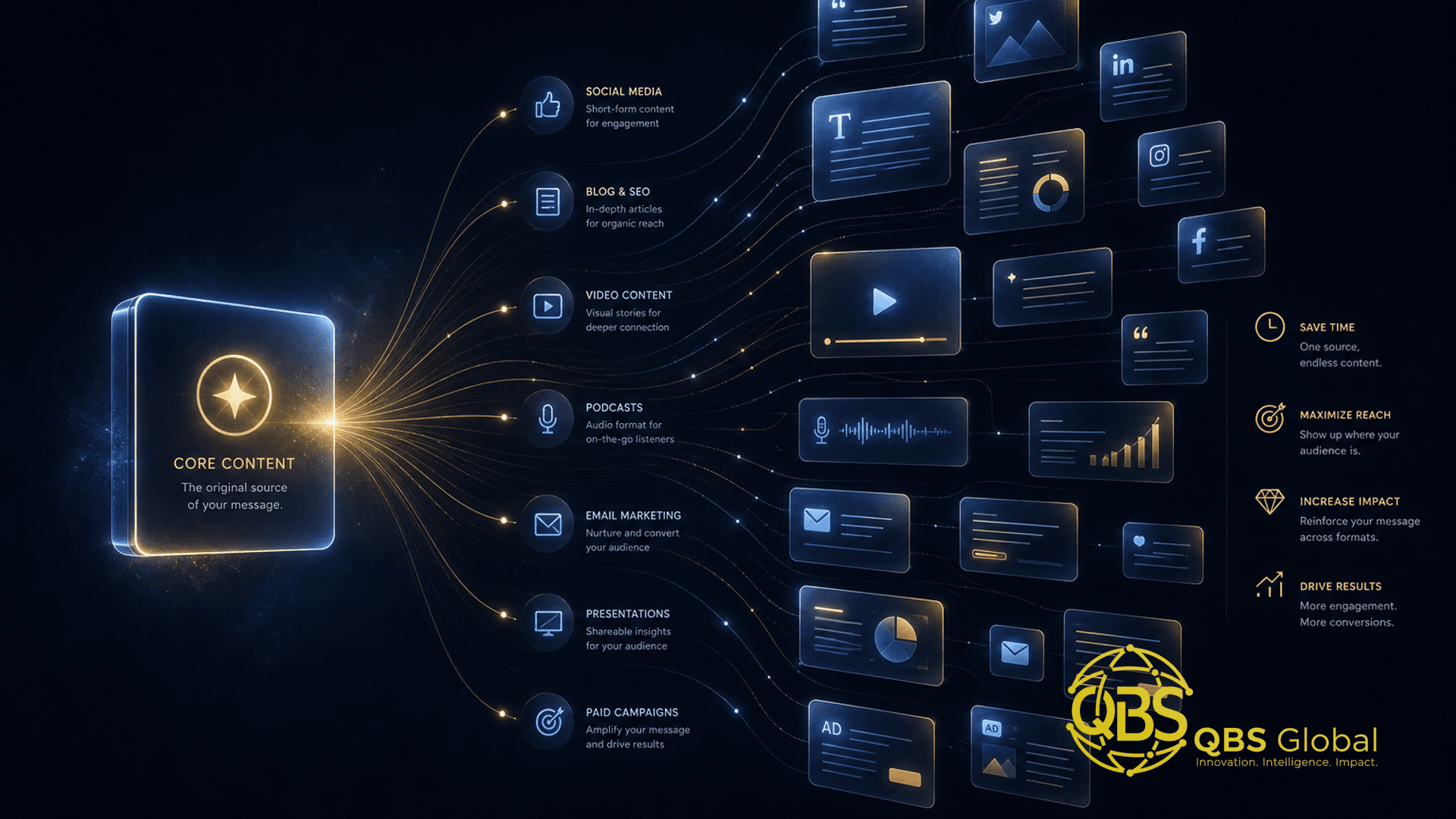
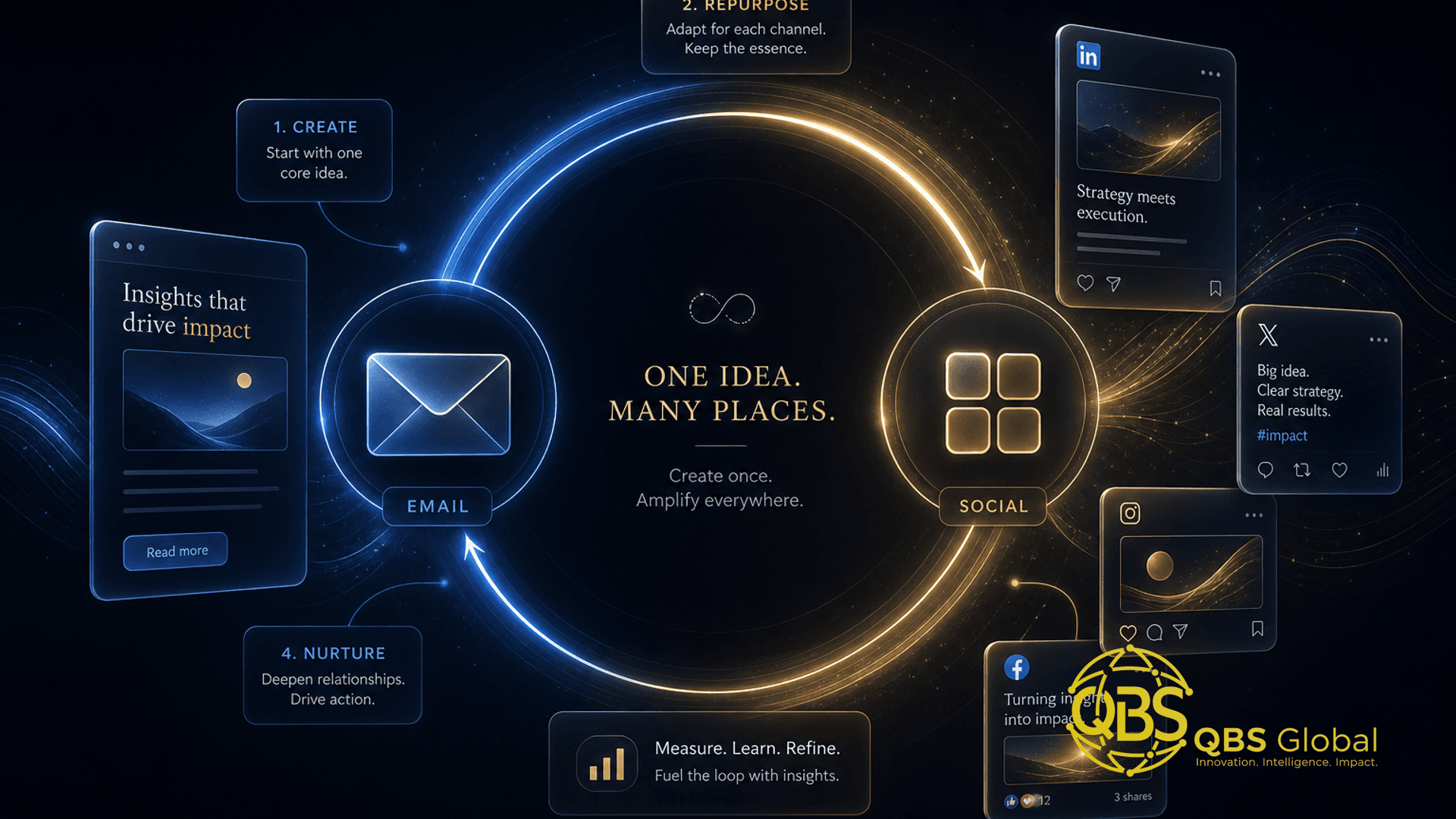
The leverage move is repurposing. One genuinely good idea can become a post, a comment, a DM opener, and later a longer piece. You do not need more ideas; you need to squeeze the good ones. If you want a structured way to turn one input into many outputs, this content repurposing system for service businesses lays out the workflow we use — it is what keeps a founder-led engine running without eating your whole week.
Turning profile views into conversations
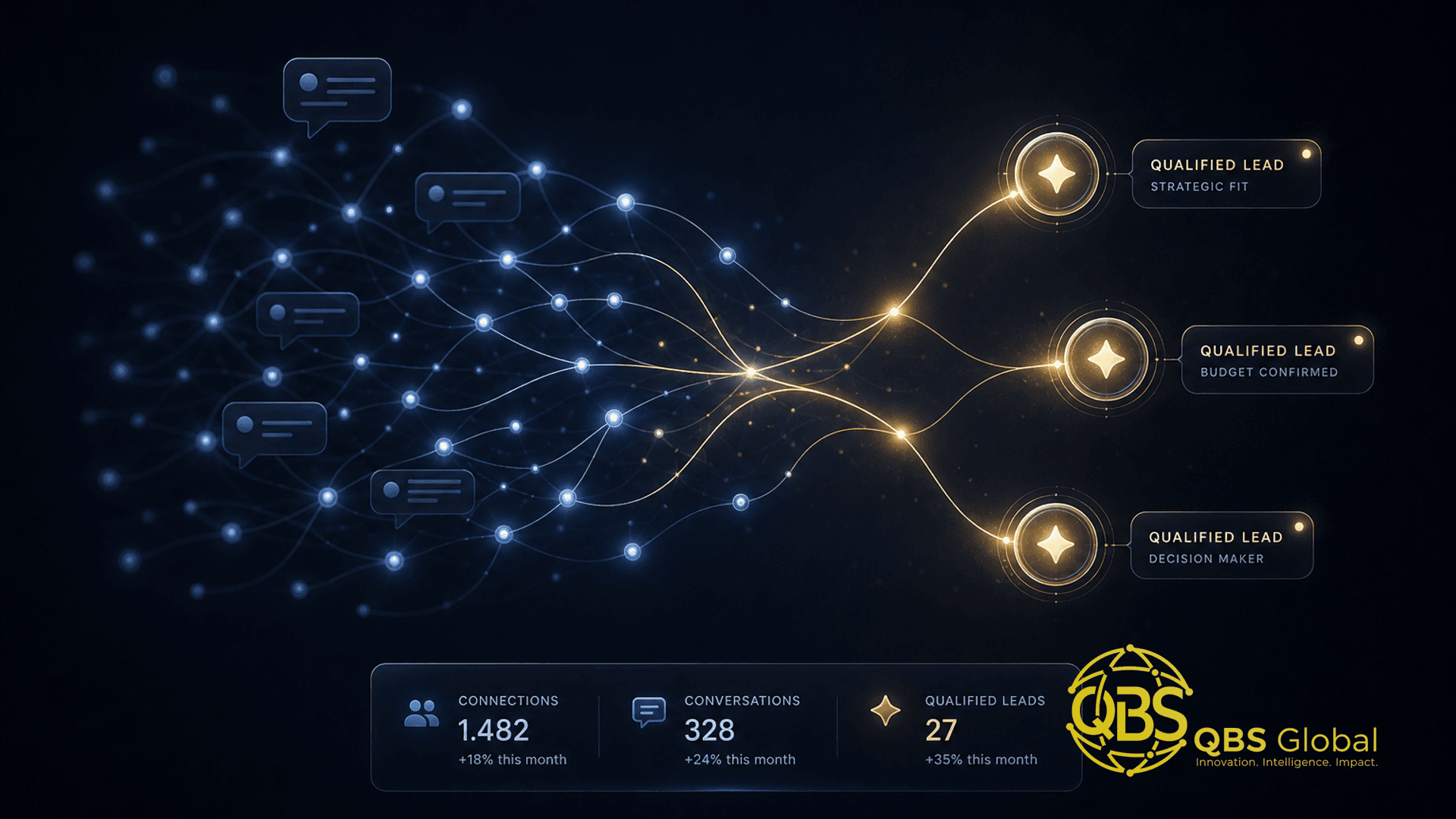
Here is the step most people miss. Every good post sends a wave of people to look at your profile — and most founders never do anything with that signal. Profile views are warm intent. Treat them as the start of the funnel, not a vanity number.
Check who viewed your profile. LinkedIn shows you a meaningful slice of recent viewers. When someone in your target buyer profile shows up there — right industry, right role, right size of company — that is a person who just raised their hand quietly.
Engage before you ever DM. Go to their profile, read their recent posts, and leave one genuinely useful comment on something they wrote. Not "great post" — an actual thought that adds to theirs. You are not selling; you are becoming a familiar, helpful name in their notifications.
Let your content do the qualifying. Because your posts consistently speak to one buyer and one problem, the people who view your profile and follow you are self-selecting. By the time a conversation starts, they already half-believe you can help — which is exactly why organic conversion outperforms cold ads. A well-built lead-gen form on LinkedIn converts around 13%, versus roughly 2.35% for a typical landing page (Sopro); a warm DM started from a profile view converts far higher than either, because there is no cold ask at all.
The shift: Stop thinking "post and hope." Start thinking "post, watch who leans in, then start a real conversation with them."
The soft-DM system that books calls (without being spammy)
The DM is where organic leads turn into calls. It is also where most people blow it — by pasting a pitch and a calendar link into a stranger's inbox. That gets ignored or reported. Here is the non-spammy system instead.
The core rule: a soft DM opens a conversation; it never closes a sale. Your only goal in the first message is a genuine human reply.
A simple four-touch flow
- The opener (no ask). Reference something real and specific: their post, a shared connection, a comment they left, or the fact that they viewed your profile. "Saw your note on onboarding chaos — totally agree the problem is usually an undocumented process, not the team. How are you handling it right now?" That is it. No pitch.
- The value reply. When they answer, be useful with zero strings. Share a quick observation, a resource, or a one-line idea that helps them whether or not they ever buy. This is where trust gets built.
- The soft bridge. Only after a real exchange, and only if there is a clear fit, mention what you do — lightly, framed as relevance, not a pitch. "We actually automate exactly that kind of repetitive intake for service teams. Happy to share how a couple of firms approached it if it's useful."
- The low-pressure invite. If they lean in, suggest a short, specific call. "Want to grab 20 minutes? I'll walk you through what I'd automate first — no pitch, just the map." The call is positioned as help, not a sales meeting.
What separates a soft DM from spam
| Spammy DM | Soft DM |
|---|---|
| Generic copy-paste opener | References something specific and real |
| Pitches in message one | Asks a genuine question first |
| Leads with a calendar link | Earns the call after a real exchange |
| All about you | Useful to them whether or not they buy |
| Sent in bulk, untracked | Personal, and you remember the thread |
Keep the volume human. A handful of thoughtful new conversations a day will out-perform a hundred automated blasts — and it keeps your account safe and your reputation intact. You are playing for trust, not volume. Done right, the soft-DM flow is the part of this system that consistently converts a warm reader into a booked call.
A repeatable weekly routine
A system only works if it fits into a real week. Here is a lightweight routine a founder can run in well under an hour a day.
| Day | Focus | Time |
|---|---|---|
| Monday | Write and publish post 1; capture this week's ideas | 30 min |
| Tuesday | Comment on 10 target prospects' posts; open 2-3 soft DMs | 25 min |
| Wednesday | Publish post 2; reply to all comments and DMs | 30 min |
| Thursday | Review profile viewers; engage + open 2-3 new DMs | 25 min |
| Friday | Publish post 3; advance live DM conversations toward calls | 30 min |
The two non-negotiables are consistency and follow-through. Posting three times one week and going silent for two kills momentum, because the algorithm and your audience both reward showing up. And every DM that goes quiet is a lead you are leaving on the table — a simple habit of circling back after a few days recovers a surprising number of conversations.
Track three numbers, nothing more: new conversations started, calls booked, and clients closed. Impressions and likes are nice, but they do not pay you. If conversations are flat, your posts are not specific enough to the buyer. If conversations happen but calls do not, your DM flow is pitching too early. The metrics tell you exactly what to fix.
How to scale it (or hand it off)
The honest tension with founder-led content is that it works because it is the founder — which makes it hard to scale. You do not solve that by outsourcing your voice. You solve it by separating what only you can do from what a team can support.
Only the founder can: hold the point of view, make the strategic calls, and reply to DMs and comments in their real voice. These are relationship and judgment tasks. Hand them off and the whole thing rings hollow.
A team can absolutely support: turning your voice notes and call takeaways into draft posts, editing and formatting, scheduling, repurposing one idea into many, monitoring comments, and flagging warm profile-viewers and DM threads for you to personally pick up. This is the difference between automating the busywork and faking the founder.
The cleanest model is what we run for clients: the founder records a few minutes of raw thinking each week, and a delivery team turns it into a publish-ready engine — drafts in the founder's voice, a posting schedule, repurposed assets, and a tidy daily shortlist of people to personally reply to. The founder spends 20 minutes a day on relationships; the system handles the rest. If you want to see how that division of labor works in practice, here is how we think about outsourcing social media to an offshore team without losing the authenticity that makes it convert.
The rule: Outsource the production, never the personality. The founder stays the face and the voice; everything else is busywork you can delegate.
This is exactly the kind of operational lift QBS Global handles — we build the organic LinkedIn engine, automate the repetitive production around it, and leave you with the part that actually closes: real conversations in your own voice. The goal is a steady flow of booked calls without an ad budget, an agency retainer, or your whole week.
If you would like a tailored version of this playbook for your specific service and buyer, book a free 30-minute call with us and we will map your first 30 days of organic LinkedIn — your positioning, post angles, and DM flow — and send you a written roadmap within 48 hours.
Frequently asked questions
Can you actually generate leads on LinkedIn without running ads?+
Yes. The majority of B2B social leads come from LinkedIn, and most of that happens organically through founder posts, comments, and direct messages — not paid campaigns. Ads speed up reach, but a consistent organic system reliably books calls for service firms with zero ad budget.
How long does organic LinkedIn lead generation take to work?+
Most founders see the first real conversations within 3 to 6 weeks of consistent posting and outreach, and a steady call flow by month three. It compounds: the audience you build this quarter keeps generating inbound interest the next, because old posts and profile visits keep surfacing you.
How many times a week should I post on LinkedIn to get leads?+
Two to five quality posts a week is the proven sweet spot — analysis of over two million posts found this range delivers a meaningful jump in reach versus posting once. For most service founders, three posts a week plus daily commenting is enough to stay visible without burning out.
What is a soft DM and why does it work better than a sales pitch?+
A soft DM opens a conversation instead of pitching. It references something specific about the other person, offers value or asks a genuine question, and never leads with a calendar link. It works because B2B buyers research quietly and resent being sold to before they are ready.
Should a busy founder do LinkedIn themselves or hand it off?+
Do the thinking and the relationships yourself; hand off the production. The founder's voice, point of view, and DM replies cannot be faked, but drafting, editing, scheduling, and repurposing can be supported by a team so the system runs even on your busiest weeks.
Does this work for service businesses outside the US?+
Yes. LinkedIn is global and buyer behavior is the same everywhere — people buy services from operators they trust. A founder in any market can reach US, UK, EU, and global clients with the same organic system, as long as the content is written in clear English and speaks to a specific buyer.