Philippines vs India for SaaS Customer Support: How to Build a Blended Offshore Team
Philippines vs India customer support for SaaS: where voice wins, where tech depth wins, real per-seat costs, and how to build a blended team.
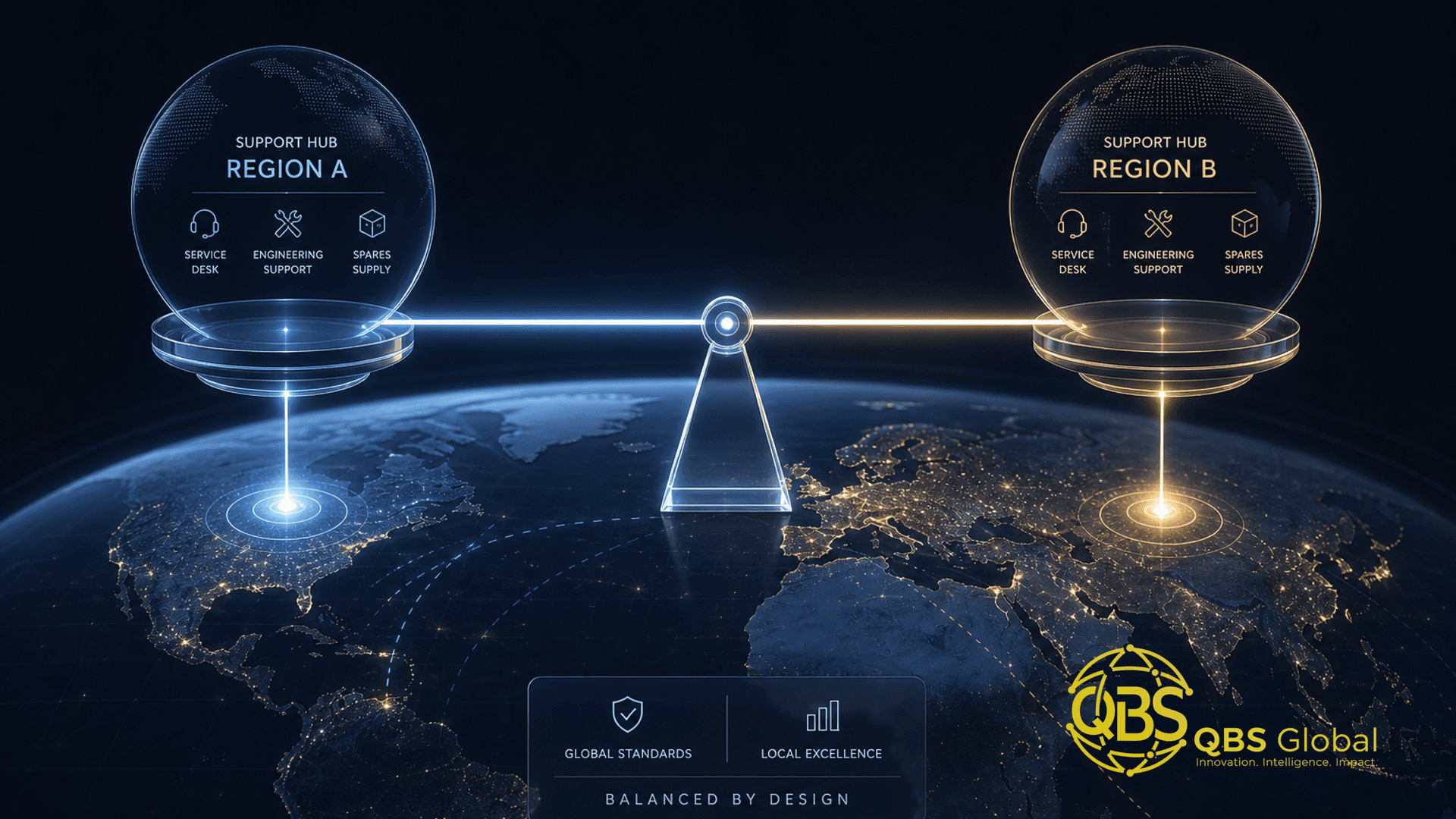
You are scaling a SaaS product, support volume is climbing faster than your runway, and you have hit the question every founder eventually hits: where do we staff support? Most guides answer with generic BPO talking points — "the Philippines is cheaper than the US, India has a huge talent pool" — and none of it tells you what matters when the tickets are about your product, your API, and your churn-prone trial users.
This guide is for the founder or head of support choosing between (or combining) the Philippines and India for SaaS customer support. Skip the brochure language: here is what SaaS support genuinely needs, where each country is strong, why the smartest teams blend the two, what it really costs per seat, how to schedule for 24/5 or 24/7, and a checklist to build the team.
What SaaS support needs that generic BPO advice misses
Generic outsourcing advice treats "customer support" as one undifferentiated job. SaaS support is at least three jobs, pulling in different directions.
First, SaaS support is a product surface, not a cost center. Your support team is often the only human a trial user talks to before deciding whether to pay. A confused answer or a robotic tone doesn't just annoy someone — it kills a conversion. That makes tone, empathy, and first-contact resolution load-bearing in a way they never are for order-status calls at a retailer.
Second, SaaS tickets split into two very different skill demands. Roughly speaking:
- Tier 1 — "I can't find the export button," "how do I add a teammate," "why was I charged twice." This is the bulk of volume. It rewards fluency, patience, calm voice, and fast pattern-matching against a knowledge base.
- Tier 2 — "your webhook is returning a 500," "the API rate limit is wrong," "data didn't sync." This is lower volume but high stakes. It rewards technical literacy, the ability to read logs, reproduce a bug, and write a coherent escalation to engineering.
A team optimized purely for Tier 1 mishandles the technical 20%. A team optimized for engineering depth is expensive and over-formal on the simple 80%. Most "Philippines vs India" debates are really arguments about which tier you are staffing — and the honest answer is you are usually staffing both.
Third, SaaS support is increasingly AI-assisted. Deflection bots, suggested replies, and auto-summaries handle a chunk of Tier 1 — which raises the bar for the humans who remain, because what reaches a person is messier. Wherever you staff, plan for agents who supervise automation, not agents who only follow scripts (the same shift we cover in AI workflow automation — automate the busywork, keep humans on judgment).
Hold those three realities in mind. They are the lens for everything below.
Philippines strengths: voice, US-norm fluency, CSAT
The Philippines built a global reputation on exactly what SaaS Tier 1 needs most: warm, fluent, Western-tone front-line service. That is a structural advantage with real scale behind it.
The Philippine IT-BPM industry closed 2024 at roughly $38 billion in revenue and about 1.82 million full-time employees, growing 7% year over year, much of it anchored in voice and customer-experience work (IBPAP / Philippine News Agency) — a deep, mature pool built around serving US and Western customers.
On language, the Philippines ranked 22nd of 116 countries in the 2024 EF English Proficiency Index, in the "high proficiency" band, second in Asia only to Singapore (EF EPI 2024). Much of that proficiency is conversational and tuned to American norms — idioms, politeness conventions, and a neutral-leaning accent US callers find easy. For voice and synchronous chat, that lowers friction on every interaction.
Where the Philippines is the right call:
| Strength | Why it matters for SaaS |
|---|---|
| Voice and live chat | Calm, fluent first response — the make-or-break trial moment |
| US/Western cultural fluency | Tone, empathy, and idiom feel native to American users |
| High CSAT on front-line | Strong scores on Tier 1 satisfaction and de-escalation |
| Mature CX labor pool | Easy to scale Tier 1 headcount without quality cliffs |
The trade-off: the Philippines pool skews toward customer-experience and voice roles rather than deep technical engineering. You can hire technical support engineers there, but the density of that specific profile is lower than in India — which is exactly where India comes in.
India strengths: technical depth and escalation handling
If the Philippines is built around customer experience, India is built around technology. Its IT-BPM industry is enormous — the broader tech sector reached an estimated $254 billion in revenue with around 5.4 million employees in FY2024, the business-process segment alone near $49 billion (NASSCOM Strategic Review 2024). The defining feature is the density of technically trained people comfortable reading logs, reasoning about APIs, and sitting next to a product.
For SaaS, that maps onto Tier 2. When a ticket is "your SDK throws on initialization in Safari" or "the billing webhook fired twice," you want someone who can reproduce it and hand engineering a clean repro — not just apologize warmly. India's talent depth makes this profile far easier to hire at volume.
Where India is the right call:
| Strength | Why it matters for SaaS |
|---|---|
| Technical/engineering literacy | Tier 2 agents who debug, not just deflect |
| Escalation quality | Clean repros and coherent handoffs to engineering |
| Product/back-office depth | Suited to data, integrations, and complex account work |
| Massive technical pool | Scale specialized roles (TSE, support engineer) affordably |
The trade-off mirrors the Philippines'. India's English is strong and widely used in business, but conversational register varies more across the pool, and the cultural-fluency edge for casual US voice support is weaker. At Tier 1 voice scale, that can show up in CSAT. The point is not that one country "speaks better English" — both score well. It is that the Philippines pool is tuned for front-line conversation and India's for technical problem-solving. Staff to the strength, not the stereotype.
The blended model: PH front line + India escalation
Here is the move experienced support leaders make: stop choosing. Put the Philippines on the front line and India on escalation, and you get both strengths without paying for either skill on every ticket.
A blended model looks like this:
- Tier 1 — Philippines. All first contact: voice, chat, email — account, billing, how-tos, onboarding, de-escalation. This is 70-85% of volume and where fluency and tone convert trials and retain customers.
- Tier 2 — India. Anything technical Tier 1 can't resolve in one or two touches: integration failures, API behavior, data issues, reproducible bugs. Owns the repro and the engineering handoff.
- Shared layer — QA, knowledge base, tooling. One CSAT standard, one help-center source of truth, one escalation SLA both tiers follow.
The economics are why this wins. You pay front-line rates for the high-volume easy work and reserve your more expensive technical agents for the small slice that needs them. Done well, it raises CSAT (better Tier 1 tone) and lowers escalation resolution time (real Tier 2 depth) at once.
The hard part is not the org chart — it is the handoff. A blended team only works if the Tier 1 to Tier 2 transition is clean: a structured escalation template, shared context in the ticket, and no "throw it over the wall." That coordination gets harder across two countries and several time zones — a discipline we cover in managing an offshore team across time zones. Treat the handoff as a product you design, not something that happens by accident.
Operator takeaway: the blended model is not "hire in two countries." It is "match each tier to the talent pool built for it, then engineer the handoff between them." Skip the handoff design and you get two disconnected vendors, not one team.
Cost bands and per-seat economics
Cost is where the "just pick the cheaper one" instinct misleads people. The cheaper seat is not always the cheaper outcome, because a wrong-tier agent burns more handle time and escalations. Still, you need numbers to plan — here are verified 2024-2026 bands.
Across offshore providers in Asia (India, Philippines), support agents typically bill at about $6 to $16 per hour, putting most full-time offshore seats in the roughly $1,000 to $2,000 per agent per month range all-in through a vendor (Crescendo pricing guide, Mas Callnet comparison). India anchors the low end — entry seats start near $400 per agent per month — and is generally cheaper than the Philippines for an equivalent role, while the Philippines commands a modest premium for its voice and CSAT strength.
Putting it side by side:
| Item | India | Philippines |
|---|---|---|
| Typical provider rate | ~$6–$14 / hour | ~$7–$16 / hour |
| Entry monthly seat (basic) | from ~$400 / month | higher than India for equivalent role |
| Best-fit tier | Tier 2 technical / escalation | Tier 1 voice / chat / CX |
| Relative cost for equivalent role | Lower | Modest premium |
A few planning rules these numbers imply:
- Don't staff Tier 1 with Tier 2 agents. Paying technical-support-engineer rates to answer "how do I reset my password" destroys your unit economics. The blended model exists to avoid exactly this.
- The seat price is not the all-in cost. Add tooling, QA, a 4-8 week training ramp, and management overhead — loaded cost is often 1.3-1.6x the headline seat.
- Direct-hire vs vendor changes the math. Direct hiring can lower the rate but adds local-employment, payroll, and compliance burden you now own. A managed staff-augmentation or Employer of Record provider costs a bit more per seat but handles the entity, payroll, and compliance. Which is right depends on scale — see EOR vs staff augmentation vs PEO.
Treat any single number as a rough planning estimate, not a quote — pricing swings with seniority, languages, coverage hours, and contract length.
Time-zone shift scheduling for 24/5 or 24/7 coverage
The geography that makes offshore support cheap is the same geography that covers your nights — if you schedule it deliberately.
The Philippines runs on a single time zone, UTC+8, and India on UTC+5:30 — roughly 2.5 hours apart and about 10 to 13 hours ahead of US Eastern depending on daylight saving (Penbrothers UTC+8 guide). A standard daytime shift in Manila or Bengaluru maps onto the US overnight, which means one offshore shift already keeps something covered while your US team sleeps.
How to build the coverage you actually want:
- For 24/5 follow-the-sun: run offshore Tier 1 on local daytime hours to blanket the US overnight and early morning, with a short overlap window with any onshore staff for live handoffs. Lowest friction, and it avoids forcing graveyard shifts.
- For 24/7: add a second offshore shift. Filipino professionals are widely experienced with US-aligned "graveyard" shifts (a 9 PM-6 AM Manila shift maps to roughly 9 AM-6 PM US Eastern), so part of the team can cover US business hours synchronously while another shift covers the gap. India can mirror this for Tier 2.
- Stagger the two countries. Since the Philippines and India sit 2.5 hours apart, offset their shifts to widen total coverage and keep a Tier 1-to-Tier 2 escalation path live for more of the clock.
The principle that matters most: design overlap windows on purpose. Reserve the hours when two regions are both awake for live escalations, syncs, and coaching; push async-friendly work (backlog, email, KB updates) into the non-overlap hours. The full playbook is in managing an offshore team across time zones.
Build-the-team checklist and structuring options
Here is the operator checklist to go from "we should staff support offshore" to a working blended team.
1. Map your ticket mix first. Pull 30 days of tickets and split them Tier 1 vs Tier 2. That ratio tells you how many front-line (Philippines) vs technical (India) seats you need — and it drives the whole budget. Don't guess.
2. Write the escalation path before you hire. Define what gets escalated, what context must travel with it, and the SLA on each tier. The handoff is what breaks; design it first.
3. Pick your structuring model. Three common options:
| Model | Best when | Trade-off |
|---|---|---|
| Managed staff augmentation | 1-15 agents, want speed + low compliance burden | Slightly higher per-seat; vendor co-manages |
| Employer of Record (EOR) | You want full-time employees abroad, no local entity | Flat per-employee fee on top of local salary |
| Captive / own entity | 15+ agents in one country, want max control | High setup + compliance + management overhead |
For most teams hiring their first handful of agents, managed staff augmentation or EOR is the right starting point — fast, compliant, reversible. Scale into a captive team only once volume and control needs justify the overhead.
4. Give them real product access and context. The biggest differentiator between "offshore vendor" and "extension of your team" is whether agents have product access, roadmap visibility, and a direct line to engineering for Tier 2. Treat them as colleagues, not a ticket queue.
5. Run one QA and CSAT standard across both countries. Same scorecard, same survey, same calibration. A blended team with two quality bars is two vendors wearing one logo.
6. Plan retention from day one. Offshore support quality erodes through attrition — every agent who leaves takes product knowledge with them. The same discipline that keeps offshore engineers keeps support staff: career path, fair pay, inclusion, shift health. The mechanics in how to retain offshore developers transfer cleanly to support.
7. Layer AI where it removes busywork, not judgment. Deflect repetitive Tier 1, auto-summarize tickets for faster handoffs, and free agents for the conversations that need a human. The same lens applies to adjacent functions — how firms structure offshore bookkeeping and staff accounting shows the pattern: automate the repetitive layer, staff humans on the judgment layer.
If you build against this checklist, "Philippines vs India" stops being a fork in the road and becomes a design choice — front line where fluency wins, escalation where depth wins, one team across both.
If you want this tailored to your ticket mix, volume, and budget, that is exactly the kind of build we help SaaS teams design. Book a free 30-minute call with QBS Global and we will map your Tier 1/Tier 2 split, sketch a blended Philippines-India structure, and send you a concrete staffing-and-coverage roadmap within 48 hours.
Frequently asked questions
Is the Philippines or India better for SaaS customer support?+
Neither wins outright — they win at different things. The Philippines is stronger for voice, chat, and Western-tone front-line support where CSAT and conversational fluency matter most. India is stronger for technical depth, escalation handling, and any support that shades into product, API, or engineering knowledge. Most scaling SaaS teams end up using both.
How much does an offshore SaaS support agent cost per month?+
Offshore customer support in the Philippines or India typically runs about $1,000 to $2,000 per agent per month all-in, or roughly $6 to $16 per hour through a provider, versus $400 or more per month for the lowest-cost India seats. Exact pricing depends on tier, languages, coverage hours, and whether you hire direct or through a vendor.
What is a blended Philippines-India support model?+
A blended model puts a Philippines-based front line on Tier 1 — first response, voice, chat, account and billing questions — and an India-based team on Tier 2 escalations that need technical depth, debugging, or product knowledge. You get Western-tone first contact plus deep problem-solving without overpaying for either skill on every ticket.
Can offshore teams cover 24/7 SaaS support?+
Yes. Because the Philippines sits at UTC+8 and India at UTC+5:30, both are 10 to 13 hours ahead of US Eastern, so a single offshore shift already covers your overnight. Adding a second offshore shift or a small onshore overlap gets you to genuine 24/5 or 24/7 coverage with a follow-the-sun handoff.
Should I hire support agents directly or through a vendor?+
For one to five agents, a managed staff-augmentation or Employer of Record arrangement is usually safer and faster — the vendor handles local employment, payroll, and compliance while you direct the work. Once you are running 15-plus agents in one country and want maximum control, a captive team or your own entity can become worth the overhead.
How do I keep offshore support quality high over time?+
Treat them as part of the team, not a ticket-processing vendor. Give them product access and roadmap context, run the same QA and CSAT scoring you would onshore, build a clear Tier 1 to Tier 2 escalation path, and invest in retention — attrition is the quiet killer of offshore support quality.