Fractional Project Manager: What It Is, What It Costs, and When to Hire One (2026)
Fractional PMs run roughly $66–$120 an hour or $2,000–$8,000 a month. The five signs you're ready to hire, and how to test one in a low-risk first month.

Most small businesses don't have a project management problem. They have a "the founder is the project manager" problem — and that founder is also doing sales, finance, and half the delivery. Things ship late. Clients chase. Nothing falls off a cliff, but nothing runs clean either.
A fractional project manager is the fix that sits between "white-knuckle it yourself" and "hire a full-time PM you can't yet afford." This guide covers exactly what one is, what it costs in 2026 (with real, web-verified rate bands), and the concrete signs you're ready to bring one in.
What a fractional project manager is (and isn't)
A fractional project manager is a senior PM who works for you part-time, on an ongoing basis — typically one to three days a week — and owns the delivery of your projects without being a full-time employee. You get experienced project leadership for a slice of the cost and none of the headcount commitment.
Here's the distinction that trips people up:
- Not a freelancer. A freelancer is hired for one project, ships it, and leaves. A fractional PM is an ongoing part of your team. They learn your business, sit in your standups, and carry context from one project to the next.
- Not a consultant who writes a report. A consultant tells you what to do. A fractional PM does it — runs the schedule, chases the blockers, manages the stakeholders, and reports on what actually shipped.
- Not a project coordinator. A coordinator updates tickets and takes notes. A fractional PM owns outcomes: scope, timeline, budget, and the awkward conversations that keep them on track.
Think of it as buying the judgment of a 10-year PM at the dosage your business actually needs. For a company running two or three meaningful projects at a time, that dosage is rarely 40 hours a week.
Fractional vs full-time vs agency PM
The three common ways to get project management each solve a different problem. Here's how they stack up.
| Factor | Fractional PM | Full-time PM | Agency / consultancy |
|---|---|---|---|
| Commitment | Ongoing, part-time (1–3 days/wk) | Permanent employee | Per-project contract |
| Typical cost | Hourly rate or monthly retainer | Salary + benefits + overhead | Project fee or day rate |
| Speed to start | Days | Weeks to months (hiring) | Days to weeks |
| Context retention | High — stays with you | Highest — full immersion | Low — leaves at project end |
| Best when | 1–3 active projects, can't justify full-time | 5+ concurrent projects, constant load | One big, well-defined project |
| Employment liability | None (contractor) | Full (payroll, benefits, severance) | None |
The honest read: a full-time PM only pays for itself once you have enough sustained delivery volume to keep them busy every day. Below that line — which is most small businesses — you're paying full-time overhead for part-time work. That's the gap a fractional PM fills.
If you're still deciding whether you need dedicated project management at all, our companion piece on when a small business needs a project manager walks through the threshold question first.
What it costs in 2026: real rate and retainer bands
Pricing for fractional PMs comes in two shapes: an hourly rate or a monthly retainer. Here are the verified market numbers for 2026.
Hourly rates. For the US remote market, the median freelance/fractional project manager rate is around $85/hour, with a typical range of $66–$109/hour. Benchmarking platform Go Fractional puts the average fractional PM rate a bit higher, at about $120/hour. Across the broader freelance market, rates run from roughly $25/hour for junior talent up to $235/hour for top-tier experts, with mid-level PMs averaging around $70/hour. Project-management consultants specifically tend to bill in the $56–$108/hour range.
Rates vary by market. The same source benchmarks London at a median of $106/hour and global-remote talent lower, which is where a globally-sourced delivery team can stretch your budget without dropping the seniority.
Monthly retainers. Most fractional engagements settle into a flat monthly retainer, which is simpler to budget. The mechanics are straightforward: retainer equals hourly rate times hours per week times roughly 4.34 weeks per month. Industry guidance from Fractional Jobs notes that most fractional leaders cost $5,000–$10,000 per month — but that band reflects fractional executives at meaningful weekly hours. For a fractional project manager at a lighter one-to-two-day cadence, the retainer typically lands lower.
Here's a practical breakdown using a mid-market $80/hour rate:
| Engagement level | Hours/week | Rough monthly retainer |
|---|---|---|
| Light (1 day/wk) | ~8 | ~$2,800 |
| Standard (2 days/wk) | ~16 | ~$5,600 |
| Heavy (3 days/wk) | ~24 | ~$8,300 |
(Retainers above are illustrative, calculated from the verified $80/hr mid-market rate using the standard 4.34-weeks-per-month formula. Your actual quote depends on rate and scope.)
Now the comparison that matters. In our experience, a full-time, mid-to-senior project manager in a developed market lands well into six figures in base salary — and that is before benefits, payroll taxes, equipment, and the management overhead of an extra employee. A fractional PM at one to two days a week delivers senior project leadership at a clear fraction of that, with zero employment liability. For a business that isn't yet running PMs at full capacity, the math is rarely close.
The signs you're ready for a fractional PM
You don't need a framework to know you're ready. You need to recognize the symptoms. Here are the ones that show up most often:
- Projects keep slipping and nobody owns the slip. Deadlines move, but no single person is accountable for the timeline. Things "just take longer than expected" — every time.
- The founder is the bottleneck. You're the only one who knows the full picture, so every decision routes through you. You're doing PM work in the cracks between everything else, badly, because you don't have time to do it well.
- A client engagement is too big to wing. You've landed a project where a missed milestone damages the relationship or your reputation. Running it on instinct is now a real risk.
- Your team is busy but delivery is murky. Everyone's working hard, but you can't answer "what's shipping this week and what's blocked" without a meeting and three Slack threads.
- You're scaling delivery faster than your process. New clients or new scope are coming in, and your informal "we'll figure it out" system is starting to crack under the volume.
If two or more of these are true, you're past the point where a fractional PM pays for itself — the cost of the chaos already exceeds the retainer. The same logic applies when you're scaling a software build; running a development project without a delivery owner is one of the quiet ways outsourcing software development goes wrong.
How an engagement actually works week to week
The fear with fractional anything is that you'll pay for someone who's barely present. A well-run fractional PM engagement is the opposite — it's deliberately structured around a fixed cadence so the part-time hours produce full-time accountability.
A typical week looks like this:
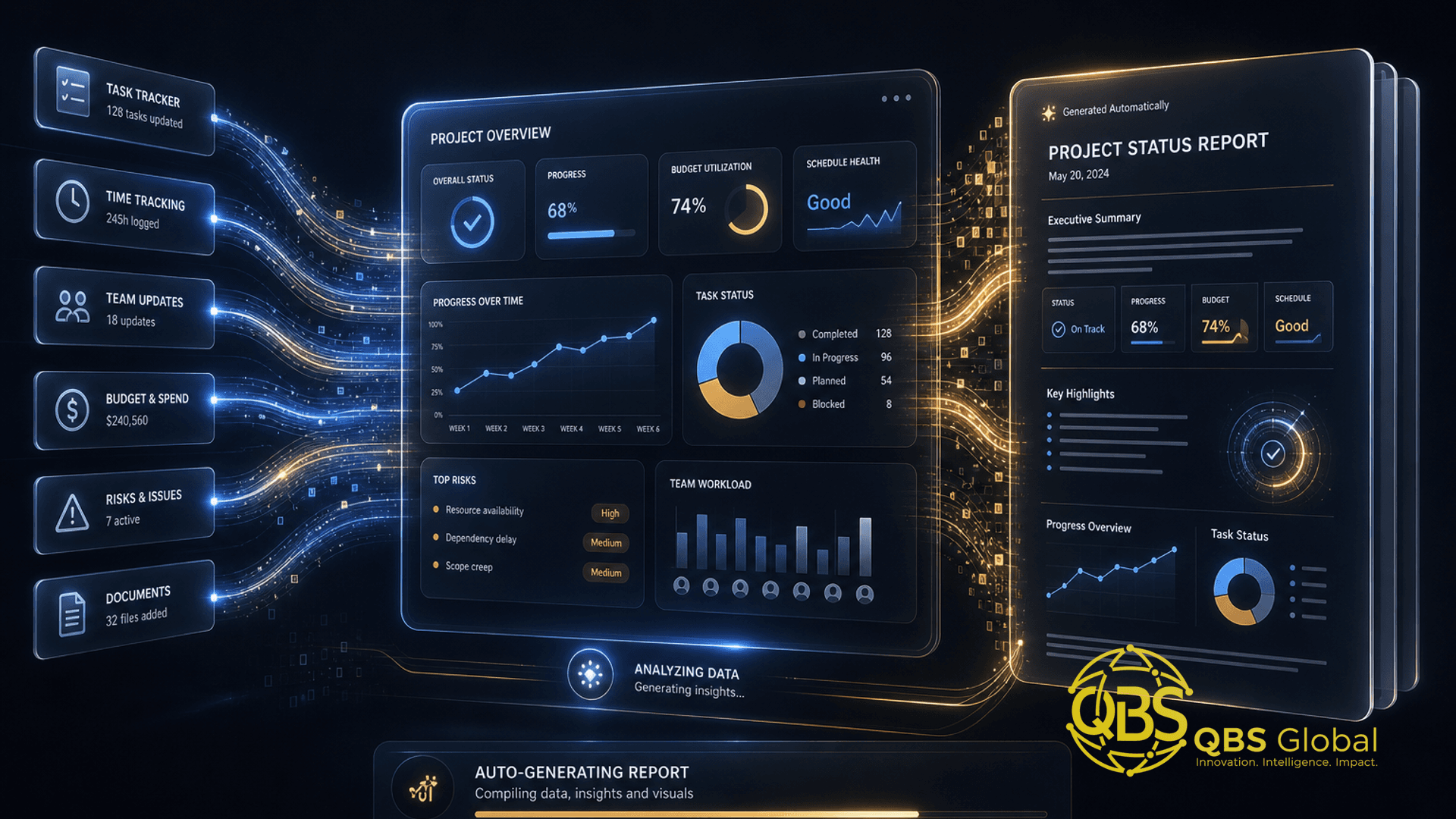
- Monday — plan and prioritize. The PM reviews status across all active projects, updates the schedule, and sets the week's priorities with you in a short sync.
- Mid-week — drive and unblock. They chase the blockers, coordinate hand-offs between people, manage client or stakeholder comms, and keep work moving. This is where most of the value lands — the quiet, constant pressure that keeps things from drifting.
- Friday — report and adjust. A clear written status: what shipped, what's at risk, what changed. No theater, just a snapshot you can act on.
Between those touchpoints, the PM is reachable asynchronously — answering questions, updating the plan, flagging risks before they become fires. The model works because project management is mostly about consistency, not hours logged. A sharp PM at two focused days a week beats a distracted founder at "whenever I get to it" every single time.
What to look for when hiring one
The market is full of people who've added "fractional PM" to their LinkedIn. Here's how to separate signal from noise:
- Delivery track record over certifications. A PMP is fine, but "I shipped these three projects, here's what went wrong and how I handled it" tells you far more than an acronym. Ask for specifics.
- Written communication you'd actually read. A fractional PM lives in async. If their status updates are clear, scannable, and honest about risk, that's the single best predictor of a smooth engagement.
- Comfort with your stack. They should already be fluent in the kind of tools you use — whether that's Jira, Linear, Asana, Trello, or just a tight spreadsheet. You're not paying them to learn project management; you're paying for it.
- A fixed cadence, not vague availability. "I'll be around" is a red flag. "I'll run your planning every Monday and send a status every Friday" is what you want. Structure is the product.
- Honest pushback. A good PM tells you when scope is unrealistic or a deadline is fantasy. If they agree with everything in the intro call, they'll agree with everything when the project is on fire too.
One more filter: make sure they manage stakeholders, not just tasks. Anyone can move a card across a board. The value is in the person who handles the hard client conversation, negotiates the timeline, and keeps everyone aligned when priorities collide.
How to get started with a low-risk first month
You don't need to commit to a long contract to find out if this works. The smartest way in is a structured one-month trial — low risk, fully reversible, and enough time to see real output.
Here's the playbook:
- Pick one real project. Not a hypothetical. Hand over something live with a deadline, so you're testing delivery, not a demo.
- Define what "good" looks like. Agree on one or two outcomes for the month: a project back on schedule, a clear delivery plan, a client relationship stabilized. Write it down.
- Start light. One or two days a week is plenty to prove the model. You can scale up once you see the difference.
- Review at 30 days. Did delivery get clearer? Did things ship? Did your own week get lighter? If yes, formalize a retainer. If no, you've spent one month's fee to learn something valuable, with no headcount to unwind.
The whole point of fractional is that you can test senior project leadership without betting the business on it. Most founders who try it never go back to running delivery on instinct.
If you're weighing whether a fractional PM is the right move for where your business is right now, QBS Global runs project management as a service for founders and small teams worldwide — book a free 30-minute call and we'll map your specific delivery gaps and send you a tailored roadmap within 48 hours.
Frequently asked questions
How much does a fractional project manager cost in 2026?+
Expect roughly $66–$120 per hour for most fractional PMs, or a monthly retainer of about $2,000–$8,000 depending on how many days a week you need them. Most part-time fractional engagements land between one and three days a week.
What is the difference between a fractional and a freelance project manager?+
A freelancer is usually booked for a single project and disappears when it ends. A fractional project manager is an ongoing part-time member of your team who owns delivery across multiple projects, attends your meetings, and grows with the business.
When should a small business hire a fractional project manager?+
Hire one when projects keep slipping, the founder has become the bottleneck, or a client engagement is too big to run on instinct — but you can't yet justify a full-time PM salary. It is the bridge between chaos and a full-time hire.
Is a fractional project manager cheaper than a full-time hire?+
Yes, for most small businesses. A full-time, mid-to-senior PM in a developed market typically carries a six-figure salary plus benefits and overhead, while a fractional PM at one to two days a week runs a fraction of that with no employment liability.
How many hours a week does a fractional project manager work?+
Commonly one to three days a week, scaled to your delivery load. The whole point is that you pay only for the capacity you actually need, and you can dial it up or down as projects ramp or wind down.
What should I look for when hiring a fractional project manager?+
Look for delivery track record over certifications, clear written communication, comfort with your tools, and a fixed weekly cadence. Always start with a low-risk one-month trial before committing to anything longer.