How to Get Your Service Business Cited by ChatGPT and AI Search (GEO Guide for 2026)
A guide to generative engine optimization for service business owners: the 5 signals that get ChatGPT and AI search to cite you, plus a 30-day plan.
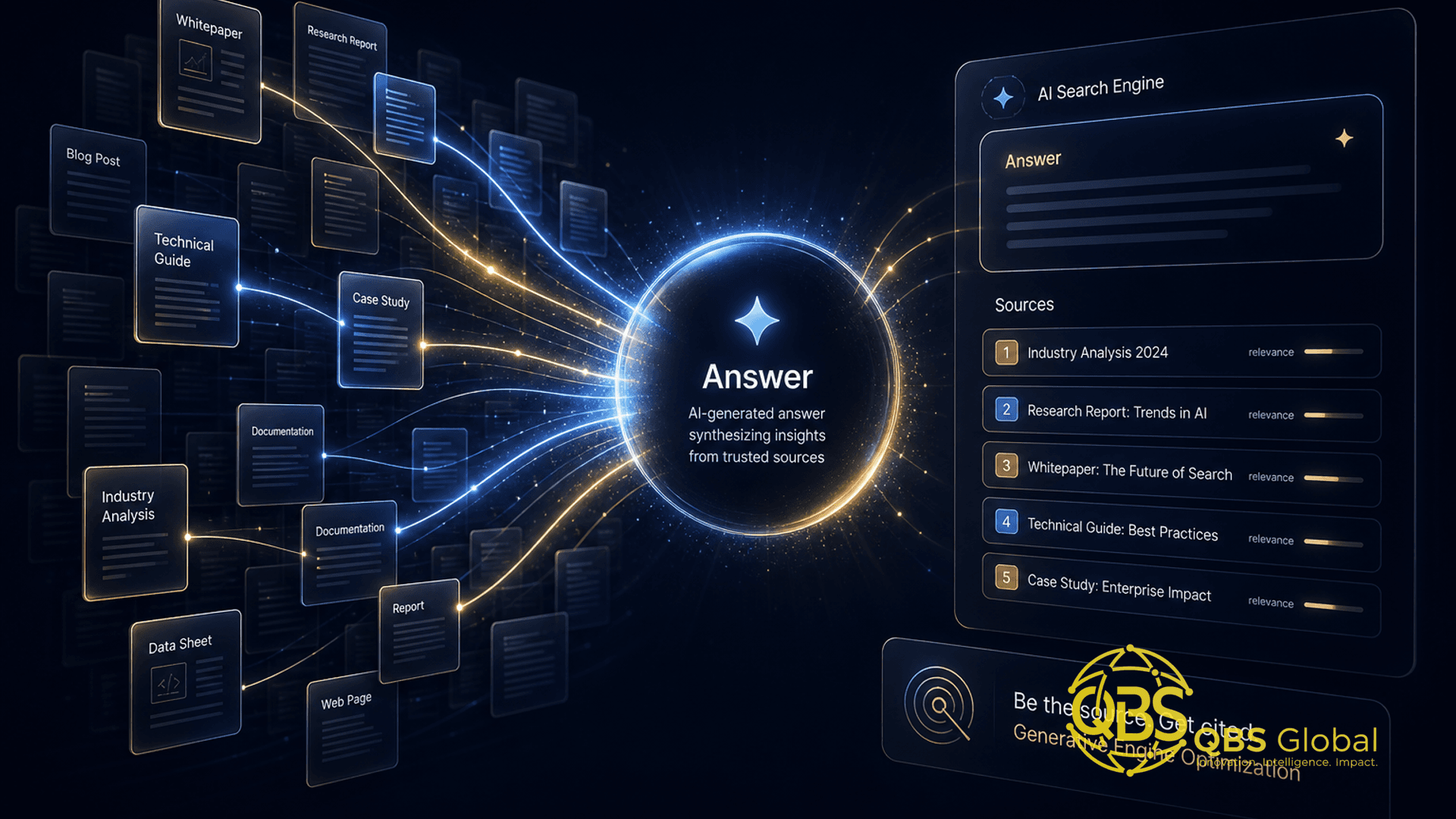
A few years ago, a prospective client looking for a marketing agency, a development shop, or a fractional project manager would open Google, scan ten blue links, and click three. In 2026, a growing share of them never see those links. They type the question into ChatGPT or Perplexity, or read Google's AI Overview, and act on a synthesized answer that names two or three firms — and quietly omits everyone else.
This is why generative engine optimization for service business owners has gone from a niche curiosity to a survival skill almost overnight. This guide is a vendor-neutral, operator's playbook: what GEO actually is, the five signals that make an AI tool cite a small firm, how to mark up your site, how to test whether you already appear, and a concrete 30-day plan you can run yourself. No hype, no magic — just the work.
Why AI Overviews and ChatGPT changed how service buyers find you
The shift is not subtle, and the numbers make it concrete. ChatGPT reached 800 million weekly active users by October 2025, up from roughly 400 million earlier that year. Google's AI Overviews — the AI summary that sits above the old blue links — passed 2 billion monthly users by mid-2025, announced by Sundar Pichai on the company's earnings call. Perplexity, the AI-native answer engine, crossed 30 million monthly users in 2025 and was handling well over 100 million queries a week.
Your buyers are inside these tools right now, and the behavior they reward is different. A Pew Research Center study of 68,879 Google searches found that when an AI summary appeared, users clicked a traditional link just 8% of the time, versus 15% without one — roughly half. Only 1% clicked a link inside the AI summary itself, and 26% ended their session entirely after reading the answer.
Read that again: the buyer often does not click at all. They read the answer, absorb which firms it named, and move on. That is the whole game now. If the AI does not mention you in its answer, for that buyer you effectively do not exist — no impression, no click, no chance to convince.
Even the analyst world saw this coming. Gartner predicted that traditional search engine volume would drop 25% by 2026 as buyers shift queries to AI chatbots and virtual agents. You do not have to accept that exact figure to feel the direction of travel. The question is no longer only "how do I rank?" It is "how do I get named in the answer?"
The buyer's first impression of your firm is increasingly formed by a sentence an AI wrote about you — not by your homepage. GEO is the discipline of shaping that sentence.
GEO vs traditional SEO: what's the same, what's new
GEO is not a replacement for SEO; it is a layer on top of it. The term itself comes from a 2023 Princeton-led research paper, "GEO: Generative Engine Optimization," presented at the KDD 2024 conference — the first peer-reviewed framework for optimizing content to be cited by generative engines. Most of the fundamentals you already know still apply. What changes is the target and the signals that matter most.
| Dimension | Traditional SEO | Generative Engine Optimization (GEO) |
|---|---|---|
| Goal | Rank a clickable link | Be named and cited inside the answer |
| Unit of success | Position on a results page | Mention frequency across AI tools |
| Primary signal | Keywords, backlinks, on-page relevance | Entity clarity, consensus, structured data |
| Off-site weight | Important (links) | Critical (mentions, reviews, third-party lists) |
| Measurement | Rankings, clicks, impressions | Prompt-based citation testing |
| Content shape | Comprehensive pages targeting queries | Quotable, well-structured, source-able passages |
Three things genuinely change for a service firm:
1. You optimize for synthesis, not position. An AI does not "rank" you so much as decide whether to include you when it composes an answer from many sources. That decision favors clarity and consensus — the same claim about you appearing in several trustworthy places.
2. Off-site signals get heavier. In SEO, your own pages carry most of the weight. In GEO, what other sites say about you — directories, review platforms, roundups, and comparison articles — often matters more than your own marketing copy, because models look for agreement across independent sources.
3. The content that wins is quotable. AI tools lift clean, self-contained statements: a clear definition, a direct answer, a specific number with a source. Wandering, fluffy prose that buries the point gives a model nothing to cite. This is the same instinct behind a good social search optimization approach for service businesses — write the answer first, plainly, then support it.
The good news for a lean firm: the Princeton GEO research found that the most effective tactics were content-level changes — adding citations, quotations, and statistics — not expensive technical overhauls. That is work a focused team can do.
The 5 signals that make AI tools cite a small service firm
Across the AI search tools, the same patterns surface again and again. None of these is a secret algorithm; they are common-sense trust signals that a model uses as proxies for "this firm is real, relevant, and recommendable."
Signal 1 — A clear, consistent entity. The AI must understand exactly who you are: one canonical business name, one description of what you do, one definition of who you serve, repeated identically across your site, your directory listings, and your profiles. Inconsistency ("QBS Global" here, "QBS Marketing Agency" there, a different tagline everywhere) makes a model uncertain, and uncertain models leave you out.
Signal 2 — Topical depth in one lane. A firm that publishes thoroughly about one vertical or one service looks more authoritative on that topic than a generalist who covers everything thinly. Depth in a narrow lane is how a small firm out-signals a big one — the AI sees you as the specialist for that exact question.
Signal 3 — Independent corroboration. Reviews, mentions in industry roundups, guest articles, podcast appearances, and inclusion in "best of" lists tell the model that third parties vouch for you. This is the consensus signal, and it is the single biggest lever most service firms ignore.
Signal 4 — Structured, machine-readable facts. Schema markup (covered next) hands a model your key facts in a format it does not have to guess at — your services, your service area, your ratings, your answers to common questions.
Signal 5 — Freshness and specificity. Concrete, current, sourced content beats vague evergreen copy. A page with a 2026 date, a specific price range, a named process, and a cited statistic gives the AI something to anchor on. Generic "we deliver world-class solutions" copy gives it nothing.
The takeaway: you do not need to win every signal. A small firm that nails entity clarity, picks one lane, and earns a handful of genuine reviews and mentions will out-cite a sprawling competitor who did none of those things.
Entity markup and structured data for a single-vertical business
Structured data — Schema.org markup added to your pages as JSON-LD — is the closest thing GEO has to a control panel. It does not guarantee citation, but it removes ambiguity, and it is one of the few inputs you fully control. Search and AI platforms explicitly consume it. A Search Engine Land analysis of schema markup in AI search confirmed that Google's AI Overviews and Bing Copilot explicitly use structured data to understand entities, and several practitioner case studies report meaningful lifts in AI visibility after adding connected, entity-linked schema (treat the exact percentages as rough, vendor-reported figures, not gospel).
For a single-vertical service firm, prioritize these schema types in order:
| Schema type | What it tells the AI | Where to put it |
|---|---|---|
| Organization | Who you are: name, logo, description, social profiles | Homepage / sitewide |
| LocalBusiness | Your service area, hours, contact (if locally relevant) | Homepage / contact page |
| Service | Each distinct offering and who it is for | Each service page |
| FAQPage | Direct answers to real buyer questions | Service and guide pages |
| Review / AggregateRating | Genuine ratings and testimonials | Pages where reviews truly exist |
| BreadcrumbStructured | Site structure and topical relationships | Sitewide |
Three rules keep this honest and effective:
- Mark up only what is true. Never add Review schema for reviews you do not have, or pad ratings. Models and platforms cross-check, and fabricated markup is a fast route to being distrusted or penalized.
- Use
sameAsto link your entity. Connect your Organization schema to your real LinkedIn, your directory listings, and your other profiles via thesameAsproperty. This is how you tell a model "all of these refer to the same firm," strengthening Signal 1. - Make the visible page match the markup. Schema describing an FAQ should sit on a page that actually contains that FAQ in human-readable text. Markup that contradicts the page is worse than none.
If your stack makes this hard, this is exactly the kind of repetitive, error-prone busywork worth automating — generating and validating schema across every page programmatically rather than hand-editing JSON. (Automating the busywork so a small team punches above its weight is our entire reason for existing.)
Reviews, mentions and comparison pages as AI-citation fuel
If structured data is the control panel, off-site signals are the fuel. AI models build their picture of your firm from the whole web, and they weight independent, third-party sources heavily — because anyone can claim greatness on their own homepage, but a roundup or a review platform is harder to fake.
This is where the citation math gets interesting. Studies of where AI Overviews pull their sources show the picture is shifting: an Ahrefs analysis found only about 38% of AI-cited pages now rank in Google's top 10 for the same query, down sharply from earlier in the cycle. Translation: you no longer need to win the #1 ranking to be cited. A well-placed comparison page or a strong third-party mention can get you into the answer even when bigger sites outrank you.
Three off-site plays move the needle most for a service firm:
1. Genuine reviews, in volume and recency. Steady, recent reviews on the platforms your industry trusts (Google, Clutch, G2, industry-specific directories) feed both the corroboration and freshness signals. A handful of detailed, recent reviews beats a pile of stale five-stars.
2. Mentions in roundups and "best of" lists. Getting included — honestly — in third-party lists for your niche is GEO gold, because those list pages are exactly what AI tools cite when a buyer asks "who are the best providers for X." Pitch yourself into relevant roundups; offer a genuine expert quote.
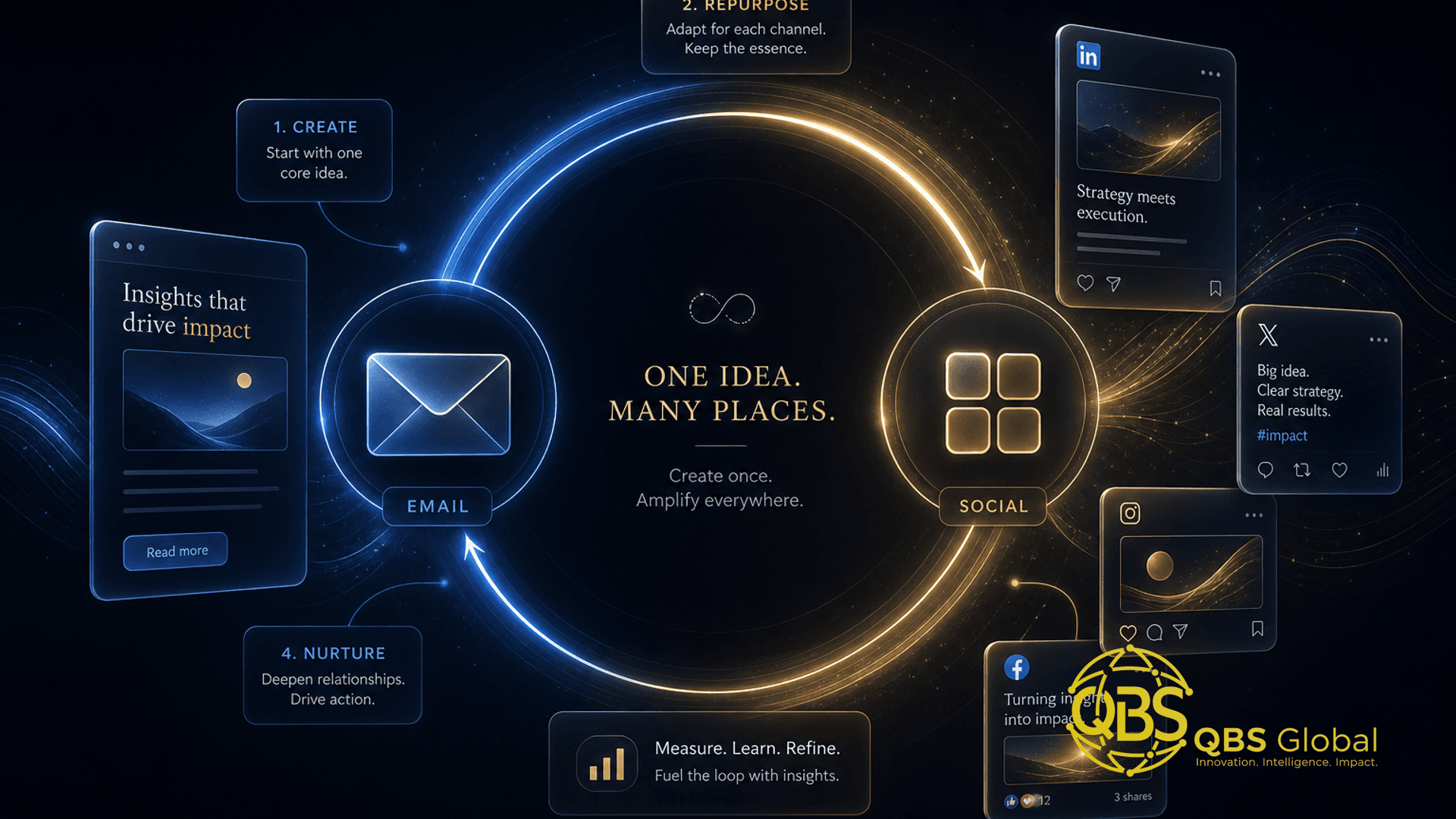
3. Your own comparison and alternatives pages. This is the most controllable, and the most overlooked. Write honest, specific comparison content for your vertical: "X vs Y vs in-house," "how to choose a provider for [your service]," "what [your service] actually costs." These pages are highly quotable, they answer the exact questions buyers ask AI tools, and they let you frame the category on your terms. The same anchor content can be split into a steady stream of posts using a content repurposing system for service businesses, so one comparison article works across your blog, LinkedIn, and email.
A caution that is non-negotiable: never fabricate reviews, testimonials, or comparison claims. It is dishonest, it is increasingly detectable, and it poisons the consensus signal you are trying to build. Real, modest proof beats invented, impressive proof every time.
How to test whether ChatGPT/Perplexity already name you
You cannot improve what you do not measure, and GEO measurement is refreshingly low-tech: you ask the AI tools the questions your buyers ask, and you write down what happens. No subscription required to start.
Step 1 — Build a prompt list. Write 8 to 12 buyer-style prompts, the way a real prospect would phrase them. For example:
- "Recommend a [your service] firm for a [your client type / industry]."
- "Who are the best providers for [specific problem you solve]?"
- "Is [your company name] a good [service] provider?"
- "Compare options for outsourcing [your service]."
- "What should I look for when hiring a [your service] partner?"
Step 2 — Run each prompt across the major tools. Test in ChatGPT, Perplexity, Gemini, and Google's AI Overviews. Run each prompt two or three times — answers vary between runs, and you want the pattern, not a single roll of the dice. Use a fresh or logged-out session where possible so personalization does not flatter the result.
Step 3 — Log four things for every prompt.
| What to record | Why it matters |
|---|---|
| Did your firm appear? (yes/no) | Your baseline visibility |
| What exactly did it say about you? | Accuracy and framing — is it even right? |
| Which sources did it cite? | Your literal GEO to-do list |
| Who appeared instead of you? | Your real AI-search competitors |
Step 4 — Mine the citations. The sources the AI cited are the pages currently winning your buyers' attention. Your job becomes getting mentioned on those sources (a directory, a roundup, a review site) or out-publishing the weakest ones with better comparison content of your own.
Do this once a month. It takes under an hour, costs nothing, and turns GEO from a vague worry into a concrete, trackable scoreboard. When a competitor starts showing up where you don't, you will see it before it costs you a deal.
A 30-day GEO action plan for a lean service firm
Here is a sequence a solo founder or a small team can actually run, without a big budget. It front-loads measurement and entity clarity, then builds the off-site signals that compound.
Week 1 — Baseline and entity cleanup.
- Run the prompt test above across all four AI tools; save the results as your baseline.
- Lock down one canonical business name, one description, and one ICP statement.
- Audit your homepage, footer, and top three directory listings for consistency — fix every mismatch.
Week 2 — Structured data and your core pages.
- Add Organization and (if relevant) LocalBusiness schema sitewide, with
sameAslinks to your real profiles. - Add Service schema to each offering page and FAQPage schema to your most-visited guide.
- Rewrite your main services page so the first sentence of each section plainly answers the question a buyer would ask — make it quotable.
Week 3 — Off-site corroboration.
- Request reviews from three or four genuinely happy clients on the platform your industry trusts.
- Identify five relevant roundups or "best of" lists for your niche and pitch yourself into them honestly.
- Claim and complete every relevant directory and profile listing — consistency, again, is the win.
Week 4 — Quotable content and re-test.
- Publish one honest comparison or "how to choose" article for your vertical, packed with specifics and a cited statistic or two.
- Repurpose that article into a week of posts so it works beyond the blog.
- Re-run the Week 1 prompt test and compare. Note what changed, and set the same review for 30 days out.
Beyond the 30 days, GEO is a monthly habit, not a one-time project. Re-test your prompts, add reviews, ship one quotable page, fix any entity drift. The signals compound: each genuine mention makes the next citation more likely.
A final reality check. AI search rewards firms that are clear about who they are, narrow in what they claim, and corroborated by people other than themselves. That is unusually fair to small, focused service businesses — the same firms that struggled to outrank giants on broad keywords can absolutely win the specific questions their buyers actually ask. If your wider digital presence is shaky, it is worth fixing the fundamentals first; many founders trip over the basics, as we cover in the social media mistakes service SMEs keep making, and it is hard to win AI citation while the foundations leak. For the bigger arc of where this is all heading, our take on the future of AI in business sets the context.
If you would rather not run all of this yourself, that is precisely the kind of busywork we automate. Book a free 30-minute call with QBS Global and we will run the prompt test on your firm, find where the AI tools are missing you, and hand you a tailored GEO roadmap within 48 hours.
Frequently asked questions
What is generative engine optimization for a service business?+
Generative engine optimization (GEO) is the practice of getting your firm named and cited inside AI-generated answers from tools like ChatGPT, Perplexity, and Google's AI Overviews. For a service business it means structuring your site, reviews, and third-party mentions so an AI confidently recommends you when a buyer asks for a provider in your niche.
How is GEO different from traditional SEO?+
SEO optimizes to rank a clickable link on a results page; GEO optimizes to be the answer itself, named inside a synthesized response that may never produce a click. The foundations overlap — clear content, technical health, and authority — but GEO adds entity clarity, structured data, and off-site mentions as first-class signals because AI models weigh consensus across the whole web, not just your page.
Does a small firm really need GEO in 2026?+
If your buyers ask AI tools for recommendations before they shortlist vendors, then yes. The head term 'GEO' is dominated by huge marketing brands, but the specific question — 'who is a good provider for my exact problem in my vertical' — is wide open. Small, focused firms can win those niche AI answers far more easily than they can win broad search rankings.
How do I check whether ChatGPT or Perplexity already mention my business?+
Ask the tools directly with buyer-style prompts, such as 'recommend a [your service] firm for a [your client type]' or 'is [your company] a good [service] provider.' Run each prompt two or three times across ChatGPT, Perplexity, Gemini, and Google's AI Overviews, then log whether you appear, what it says, and which sources it cites. That citation list is your GEO to-do list.
What structured data matters most for AI citation?+
Start with Organization and LocalBusiness schema to define your entity, Service schema for each offering, FAQPage schema on pages that answer real buyer questions, and Review or AggregateRating where you legitimately have reviews. The goal is to remove ambiguity about who you are, what you do, and who you serve so a model can quote you without guessing.
How long does it take to see results from GEO?+
Expect a 30 to 90 day horizon, not overnight. Some changes — schema, a clear services page, a comparison article — get crawled within days, but AI models update their picture of your firm gradually as new mentions and reviews accumulate. Treat GEO as a compounding habit, re-testing your buyer prompts monthly rather than expecting a single fix.