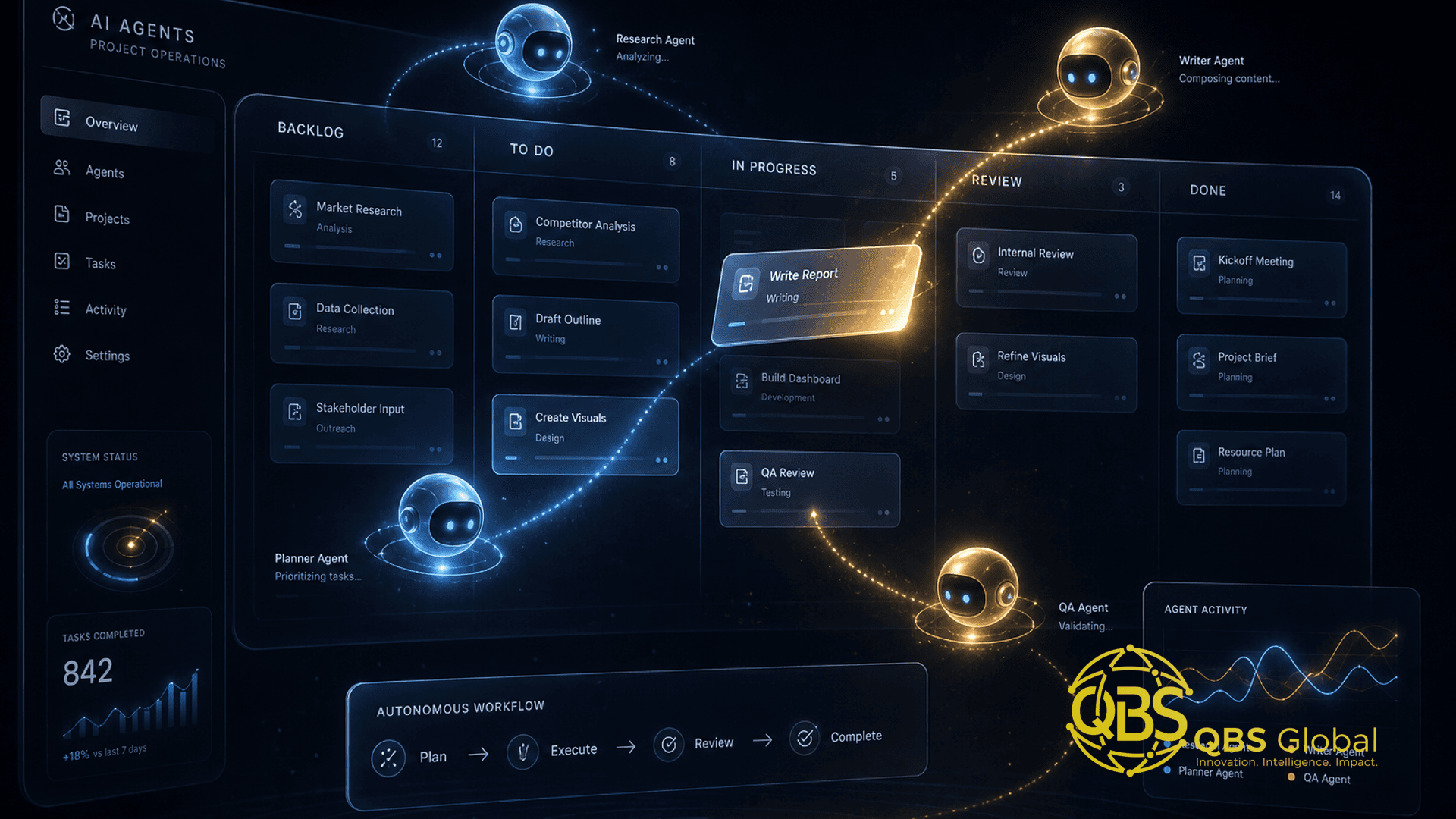
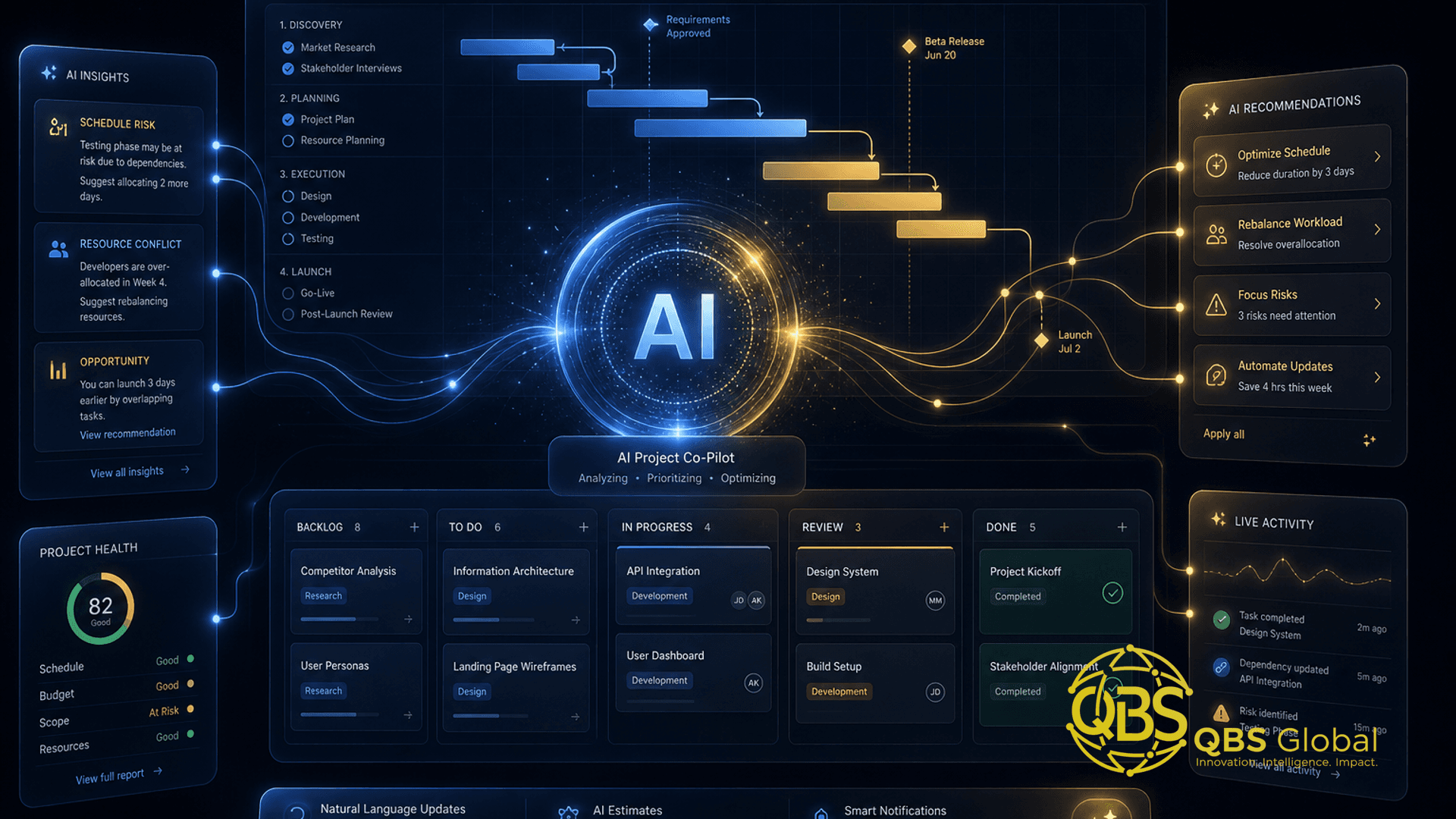
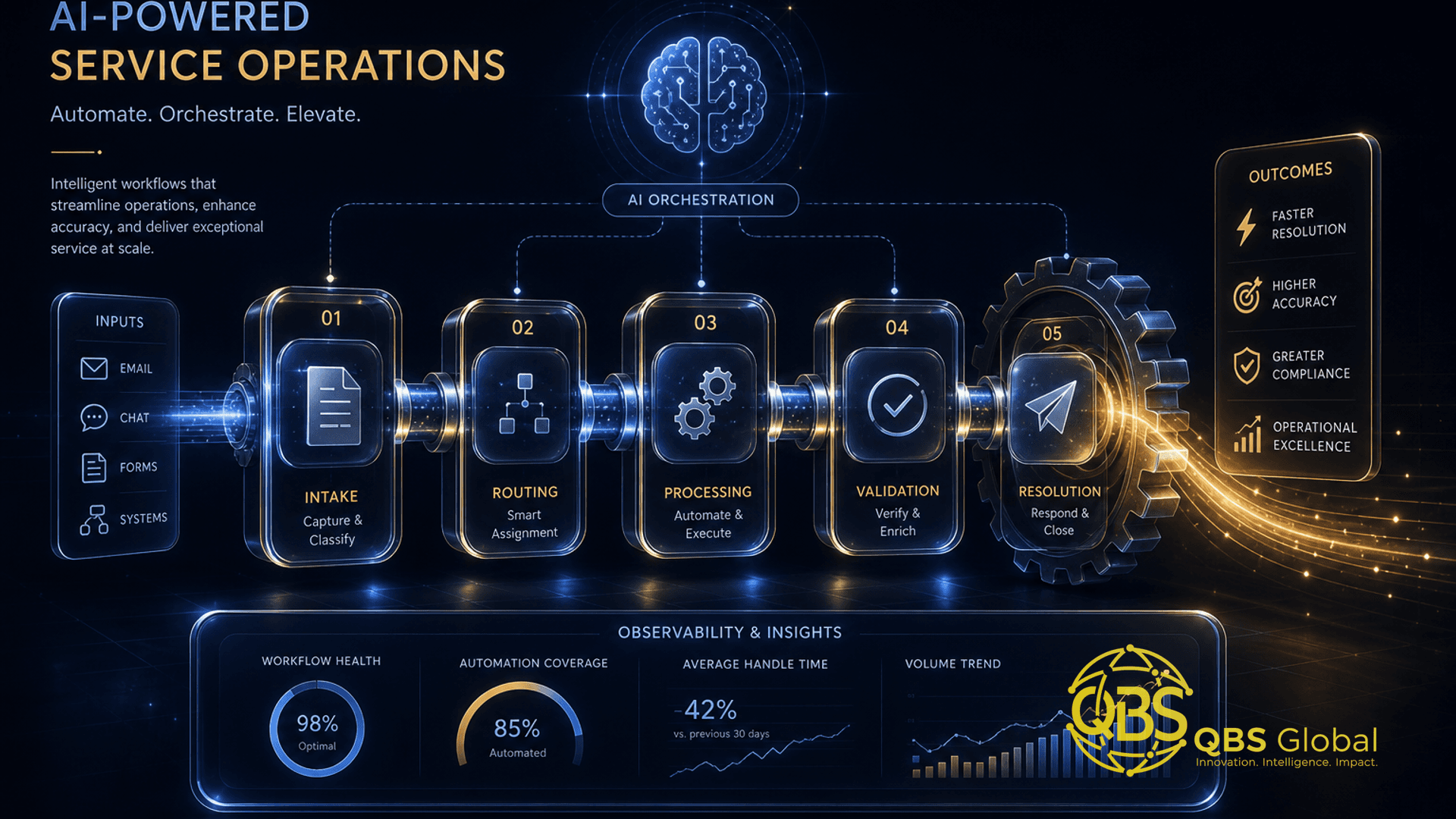
Will AI Replace Project Managers? What Actually Changes for Small Agencies in 2026
Will AI replace project managers? The honest 2026 answer for small agencies: what gets automated, what gets more valuable, and how to restructure.
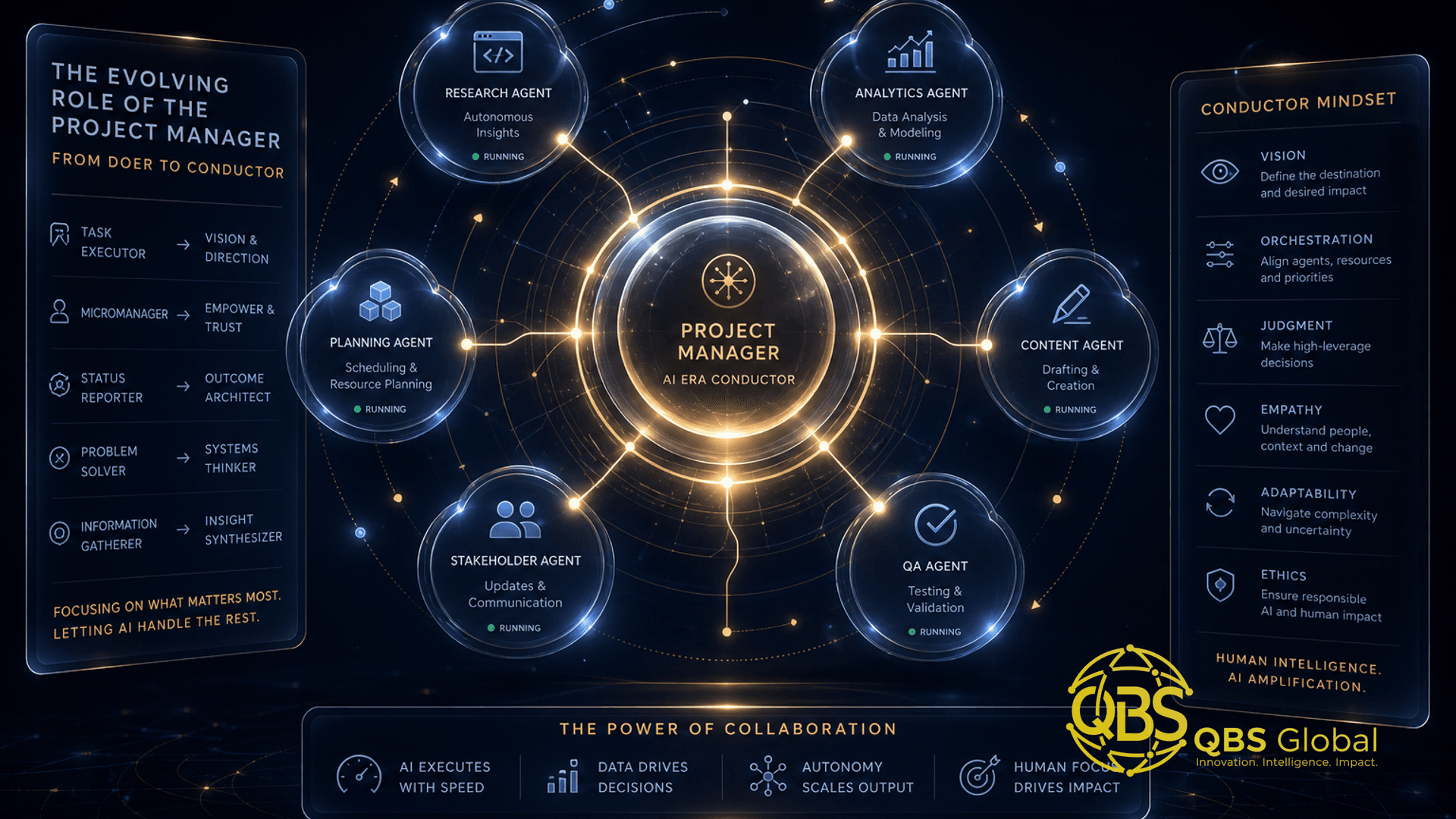
"Will AI replace project managers?" is one of the hottest searches in the project world right now — and for once the panic is grounded in something real. In mid-2026 the headlines are everywhere: agentic AI tools that don't just summarize a meeting but update the plan, flag the risk, and chase the blocker on their own. PMI is rewriting parts of its certification around AI. Founders are quietly asking whether the PM line item on their next project is still worth it.
Here's the honest, operator answer — written for people running small agencies and service firms, not for a keynote stage. The short version: AI is replacing project management tasks, not project managers. But that distinction only helps you if you know exactly which tasks are going, which parts of the job get more valuable, and how to restructure a lean team so you come out ahead instead of behind.
The honest answer: what AI replaces vs what it can't
Let's kill the binary. "Will AI replace project managers" is the wrong question. The right one is: which 80% of the job is repetitive enough to automate, and which 20% is the reason clients pay you?
The number isn't made up. Gartner predicted that around 80% of today's project management tasks — data collection, tracking, and reporting — will be taken over by AI by 2030 (SiliconANGLE on Gartner). Read that carefully: tasks, not jobs. The tasks named are the administrative ones. The judgment isn't on the list.
Here's the split that actually matters:
| AI replaces (the busywork) | AI can't replace (the judgment) |
|---|---|
| Writing status reports from project data | Deciding what to do when a project is off-track |
| Updating schedules and dependencies | Making the trade-off between scope, time, and budget |
| Taking meeting notes and extracting actions | Reading a tense stakeholder and defusing it |
| Flagging risks from patterns in the data | Choosing which risks are worth raising to a client |
| Drafting documentation and recaps | Owning the outcome when something goes wrong |
The pattern is clear once you see it. AI is brilliant at the "work about work" — the chasing, collating, and reporting. It is still poor at work that requires accountability, context that lives outside the tool, and the human cost of a hard conversation. A model can tell you a milestone slipped. It cannot decide whether to absorb the slip quietly, renegotiate scope, or call the client tonight before they find out tomorrow.
PM tasks already being automated in 2026
This isn't speculative. Adoption is already broad: 88% of organizations now use AI in at least one business function and roughly a third have integrated AI tools directly into their project management workflows (Breeze AI project management statistics). Among project managers specifically, the top live use case is risk management at 54%, followed closely by task automation and forecasting (Plaky project management statistics, citing Capterra).
The tasks getting automated right now, in real agency workflows:
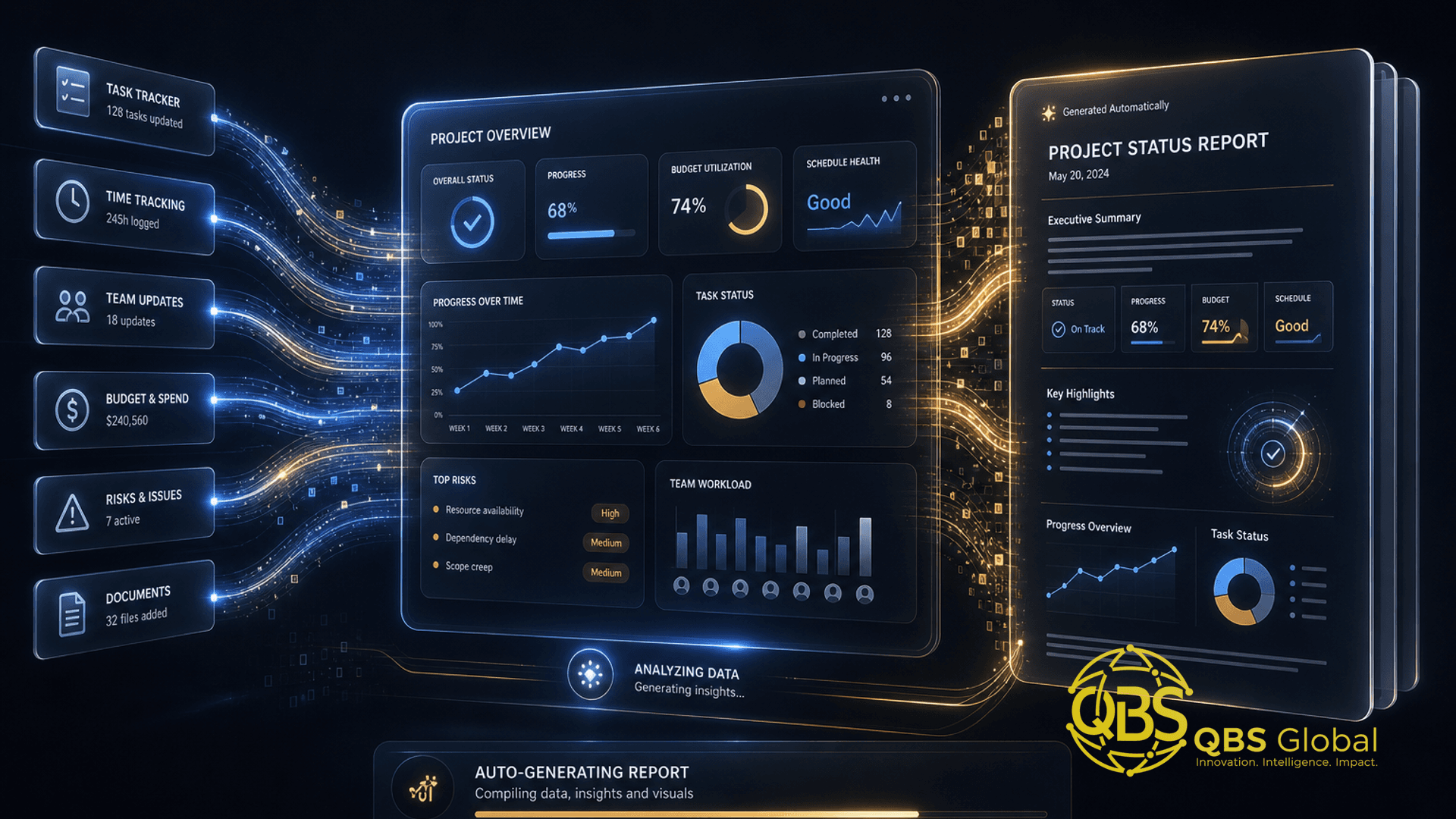
- Status reporting. Tools pull from your project board, Slack, and timesheets and write the weekly client update — no more Friday-afternoon deck assembly.
- Meeting capture. AI notetakers transcribe the call, extract decisions and action items, and assign owners automatically.
- Schedule maintenance. When one task slips, AI recalculates downstream dependencies and surfaces the new critical path instead of a human dragging Gantt bars.
- Risk detection. Pattern-matching on velocity, scope creep, and comment sentiment flags an at-risk project days before a human would feel it.
- First-draft documentation. Project briefs, scopes, retrospective summaries, and client recaps come back as editable drafts in seconds.
The honest read: if your project manager's week is mostly spent assembling information rather than acting on it, AI is coming for most of that week — and that's not a threat, it's the most overdue productivity unlock the discipline has had. The payoff is real too: in surveys, 90% of project managers reported positive ROI on AI in the prior 12 months (Plaky, citing Capterra).
If you want a deeper, vendor-neutral breakdown of how these tools actually get wired into a real project workflow, we cover it in AI project management for teams.
The parts of the job that get MORE valuable
Here's the counterintuitive part. When AI eats the admin, it doesn't shrink the project manager's value — it concentrates it. Strip away the busywork and what's left is the high-leverage core that was always the real job, just buried under reporting.
Stakeholder management gets more valuable, not less. When every team has AI writing perfect status updates, the differentiator is no longer the report — it's the person who reads the room, manages the difficult client, and keeps everyone aligned when priorities collide. That's pure human work.
Judgment under ambiguity gets more valuable. AI can model three schedule scenarios. It cannot tell you that this client will forgive a one-week delay but not a surprise, or that this developer is one bad sprint from burning out. Context that lives in relationships, not databases, is exactly where humans still win.
Scope and trade-off decisions get more valuable. The hardest moment in any project is when something has to give. Saying no, renegotiating, protecting the team while protecting the client — there's no model that owns that accountability for you.
This is why the panic is overblown. The role isn't disappearing; it's moving up the value chain. The project manager who spent 70% of their time collating data and 30% leading is about to flip that ratio. The ones who only ever did the 70% should be worried. The ones who can do the 30% become far more valuable per hour.
How a 3-10 person agency should restructure around AI
This is the section that actually changes your P&L. For a small agency, the old model was: hire a project coordinator to handle status-chasing, notes, and updates, then layer a senior PM on top for the client-facing work. AI collapses that two-layer structure.
Here's the restructure that works for a lean team in 2026:
| Old structure (pre-AI) | New structure (AI-native) |
|---|---|
| Coordinator does status, notes, updates | AI handles status, notes, updates |
| Senior PM reviews and reports to client | One strong PM owns client + outcomes |
| 1 PM can run ~2-3 projects cleanly | 1 PM + AI can run more, with less drift |
| You hire for capacity (more bodies) | You hire for judgment (fewer, sharper people) |
The practical moves:
- Don't backfill the coordinator role. When your project coordinator leaves, resist the instinct to re-hire. Route their admin tasks to AI tooling and reinvest the salary into one stronger, more senior PM — or into delivery talent.
- Standardize one project workflow before you automate it. AI amplifies whatever process you feed it. If your projects run differently every time, automation just produces inconsistent garbage faster. Pin down one repeatable flow first.
- Make "AI does the first draft, human approves" the default. Every status report, recap, and risk flag starts as an AI draft and ends with a human edit. You keep the speed and the accountability.
- Measure projects-per-PM, not hours-per-project. The win shows up as one person credibly carrying more delivery without quality slipping — because the chasing is gone.
A word of caution that gets lost in the hype: most small teams shouldn't build any of this themselves. The tools — n8n, Zapier, ChatGPT, and the AI features already inside your project board — exist off the shelf. The work is wiring them into your specific workflow and trusting the outputs, not engineering from scratch. If you're not sure you even need a dedicated PM yet, start with when a small business needs a project manager before you automate anything.
New skills a project manager needs to stay relevant
The skills gap is the real story of 2026 — and it's wide open. Even with AI everywhere, only about one in five project managers reports extensive knowledge of AI (PMI research, via project-management.com). The PMs who close that gap don't get replaced; they get promoted.
The five skills that matter now:
- AI orchestration. Knowing what to delegate to a tool, how to prompt it, and — critically — how to verify the output. The PM becomes the conductor, not the data-entry clerk.
- Sharper stakeholder communication. When AI writes the report, your edge is the conversation. Clarity, empathy, and the ability to deliver hard news become the headline skill.
- Data literacy and healthy skepticism. AI risk flags and forecasts are confident and sometimes wrong. The valuable PM questions the output instead of forwarding it.
- Workflow design. The ability to look at how projects actually run and redesign the flow around automation — rather than defending the manual way because it's familiar.
- Outcome ownership. The deeply human skill of saying "this is mine, I'll fix it" — the one thing no client will ever accept from a chatbot.
Notice what's not on the list: building Gantt charts faster, or memorizing methodology trivia. The certifications still matter as a baseline, but the differentiated value moved to judgment, communication, and orchestration.
What this means if you outsource PM instead of hiring
A lot of founders reading this don't employ a project manager — they outsource the function or are deciding whether to. AI changes that math too, and mostly in your favor.
The core shift: stop paying for data entry, start paying for judgment. If your outsourced PM's value was assembling status decks and chasing updates, AI now does that for a fraction of the cost — so that engagement should get cheaper or get repriced around higher-value work. If their value is owning your delivery, managing your clients, and making trade-off calls, AI makes them more effective per hour, and they're worth every dollar.
What to look for when you outsource PM in 2026:
- They use AI openly and show you how. A modern outsourced PM should already run AI notetakers, automated reporting, and risk tooling — and be transparent about it. If they're hiding manual hours behind work a tool now does instantly, that's a red flag.
- They own outcomes, not tickets. You're buying accountability for delivery, not a fancier status report.
- They flex with your load. The whole point of outsourcing is paying for the capacity you need this month, not a full-time salary. AI makes that flex cheaper to deliver.
This is exactly where a lean, AI-native delivery partner beats a traditional staffing arrangement: the busywork is automated, so you're paying a smaller, sharper team for judgment instead of a larger one for admin. If you're weighing the cost question specifically, what a fractional project manager costs and when to hire one breaks down the rate bands and the break-even.
A 12-month outlook, not a hot take
Forget 2030 forecasts for a second — here's what's genuinely likely over the next twelve months for a small agency, with the hype stripped out.
Agentic AI gets real but stays supervised. The leap from AI that summarizes to AI that acts — updating plans, sending nudges, opening tickets — is happening now. But for the next year these agents will run on a leash: drafting and proposing, with a human approving. Anyone telling you to hand a client project to an autonomous agent unsupervised in 2026 is selling something. We dig into where the line actually is in agentic AI for project management.
The admin layer keeps shrinking. Expect status reporting, notes, and schedule maintenance to become near-free. The PMs and agencies that haven't automated this by mid-2027 will simply be more expensive than the ones that have, for identical output.
Hiring patterns shift from coordinators to operators. Fewer junior status-chasers, more senior owners paired with tooling. The entry path into project management gets harder, and the value of proven judgment goes up.
The job title survives; the job description is rewritten. Twelve months from now, "project manager" still exists — but the week looks different: less collating, more deciding; less reporting, more relationship.
The bottom line for a founder: don't ask whether AI will replace your project manager. Ask whether your project management is mostly admin or mostly judgment. If it's admin, automate it and reinvest the savings. If it's judgment, you have a person — or a partner — worth keeping, and AI just made them better.
If you're trying to figure out exactly which parts of your project workflow to automate, what to keep human, and how to restructure a lean team around it, that's the kind of roadmap we map out one-to-one. Book a free 30-minute call with QBS Global and we'll send you a tailored plan within 48 hours.
Frequently asked questions
Will AI replace project managers in 2026?+
No. AI is replacing project management tasks — status reports, schedule updates, note-taking, risk flagging — not the project manager. The judgment, stakeholder trust, and trade-off decisions that make delivery actually happen are still human work, and arguably more valuable now.
Which project management tasks are being automated first?+
The repetitive admin: status report generation, meeting notes and action-item extraction, schedule and dependency updates, early risk detection from project data, and first-draft documentation. These are the 'work about work' tasks that eat a project manager's week.
What does Gartner predict about AI and project management?+
Gartner predicted that around 80% of today's project management tasks — data collection, tracking, and reporting — will be handled by AI by 2030. That is a forecast about tasks being automated, not about the role disappearing.
How should a small agency restructure its team around AI?+
Stop hiring coordinators for status-chasing and instead pair one strong project manager with AI tooling that handles the admin. A 3-to-10-person agency can often run more projects per PM by automating reporting and notes, then reinvesting that time into client relationships and scope control.
Should I still hire or outsource a project manager if AI can do the admin?+
Yes, but buy judgment, not data entry. Whether you hire fractionally or outsource, pay for someone who owns outcomes and uses AI to remove busywork — not someone whose whole value was assembling status decks a tool now writes in seconds.
What new skills does a project manager need to stay relevant?+
AI orchestration (knowing what to delegate to tools and how to verify it), sharper stakeholder communication, scope and risk judgment, data literacy to question AI outputs, and comfort redesigning workflows around automation rather than defending manual ones.