AI Sales Agents (AI SDRs) for Small B2B Teams: What to Automate, What to Keep Human
A practical guide to AI sales agents for small business: what an AI SDR really does in 2026, what to automate, what to keep human, and how to wire it up.
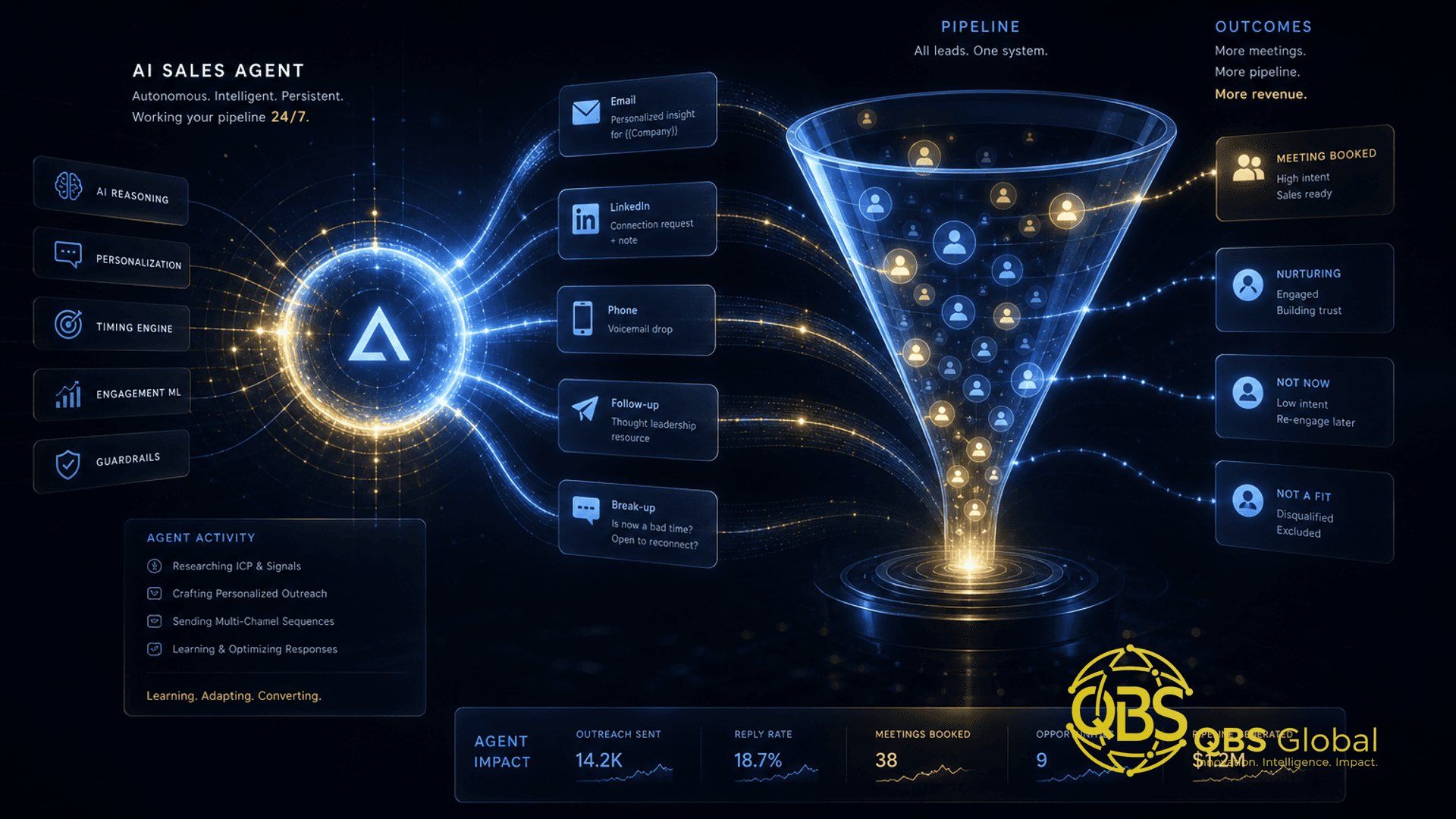
For most of the last decade, "AI in sales" meant a lead-scoring widget bolted onto your CRM. In mid-2026 it means something sharper: software that does the actual job of a sales development rep — researching a prospect, writing the email, sending the follow-ups, and booking the meeting. Search interest in "AI agents" has gone vertical, and "AI sales agents" is now a breakout rising query underneath it. The hype is loud. The reality is more useful than the hype suggests, and also narrower.
This guide is for the small team — a solo founder, a two-person sales function, a service firm where the founder still does the selling. Not "the 15 best tools." The decision underneath it: what should an AI SDR do for you, what must stay human, and how do you wire it up in a week without torching your domain reputation? We sell software and automation for a living, and we build this kind of plumbing for clients — so this is the operator's view, vendor-neutral, with the traps included.
What an AI SDR actually does in 2026
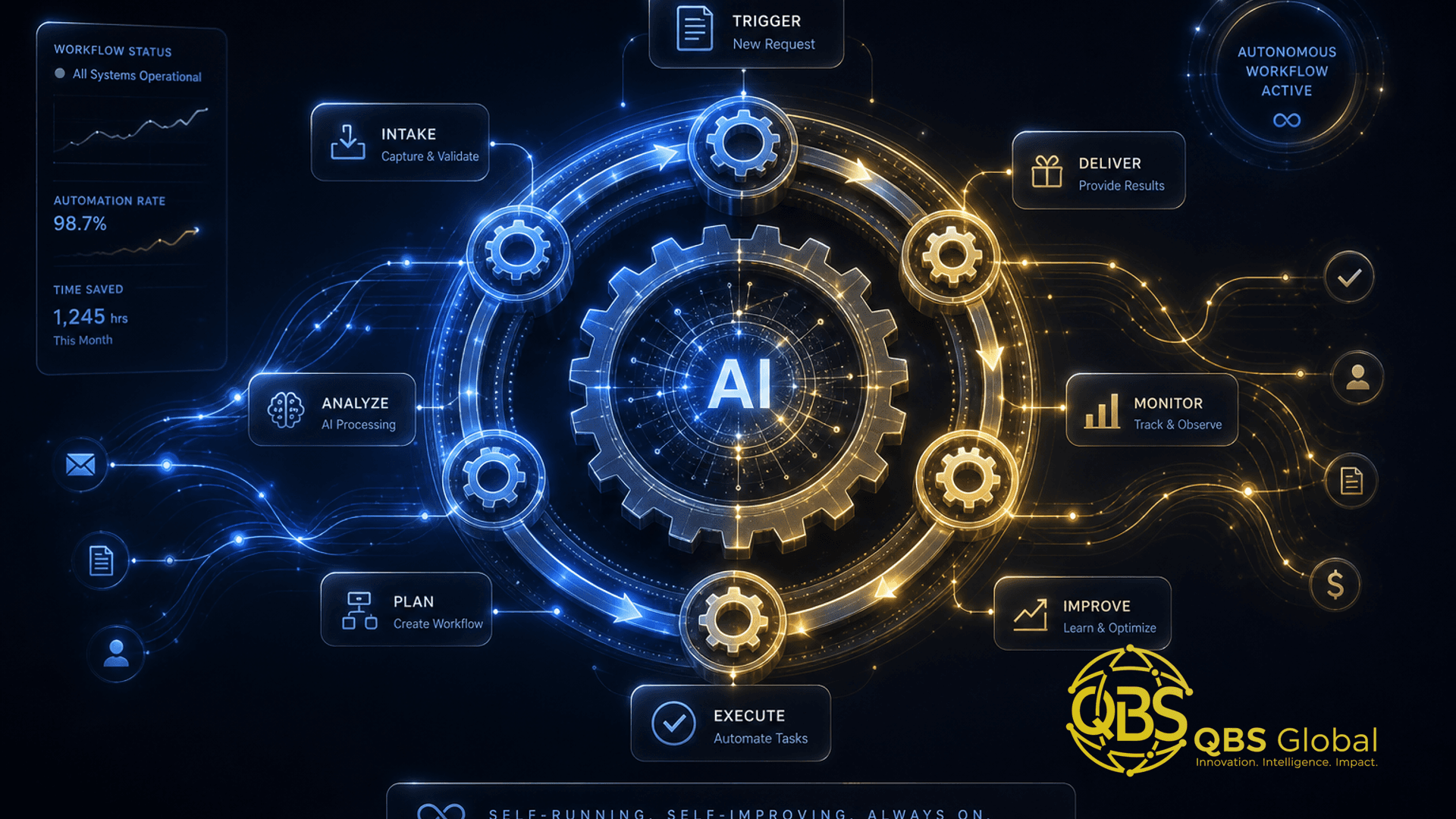
An AI SDR (sales development rep) is an agent that runs the top of your funnel: the repetitive, high-volume work that happens before a human ever talks to a prospect. In practice it does four things.
Research. It takes a target company or a list and pulls together a usable picture — what the company does, recent signals (funding, hiring, a new product, a job posting), the right contact, and an angle worth opening with. This is the task small teams skip when they're busy, and it's the one that most determines whether outreach lands.
Sequence. It drafts personalized first-touch messages and the follow-ups behind them, then sends on a schedule across email (and sometimes LinkedIn). Not one blast — a multi-step cadence with timing and conditions.
Reply. It reads inbound replies and sorts them: interested, not now, wrong person, unsubscribe, out-of-office. The good ones can handle simple back-and-forth — answering a basic question, proposing times — and escalate anything real to a human.
Book. When a prospect says yes, it puts the meeting on a calendar without the human-in-the-loop ping-pong.
The reason this is suddenly mainstream is that the productivity case finally holds up. In Salesforce's 2026 State of Sales survey of 4,050 sales professionals, 54% of sellers said they've already used AI agents, and nearly nine in ten plan to by 2027 (Salesforce State of Sales 2026). Sellers expect fully-implemented agents to cut prospect research time by 34% and email drafting by 36% (Salesforce). That maps exactly to where reps lose their week: earlier Salesforce research found reps spend less than 30% of their time actually selling, with the rest eaten by admin and busywork (Salesforce, 2023). An AI SDR attacks the other 70%.
The takeaway: an AI SDR is a research-and-outreach engine, not a closer. It exists to put more qualified conversations in front of your one human — not to replace the human.
What to automate vs what still needs a human closer
The teams that get burned treat the AI SDR as a salesperson. The teams that win treat it as the front half of one. Here's the honest split for a small B2B team.
| Stage | Automate with an AI SDR | Keep human |
|---|---|---|
| List building & research | Yes — enrichment, signals, contact-finding | Final ICP definition (who you actually want) |
| First-touch outreach | Yes — drafting + sending the sequence | The voice and offer it's built on |
| Follow-ups | Yes — timed, conditional cadence | — |
| Reply triage | Yes — sort, tag, route | Reading the warm ones yourself |
| Simple Q&A / scheduling | Mostly — basic answers, calendar booking | Anything nuanced or pricing-related |
| Discovery & qualification | No | Yes — a live conversation |
| Scoping, pricing, objections | No | Yes |
| The close | No | Yes |
The line is roughly this: automate the work that's repetitive and judgment-light; keep the work where trust is built or money is discussed. Nobody buys a development engagement, a fractional PM, or a hiring partnership off an AI's email. They buy it after a real conversation with a person they've decided is competent and honest. The agent's job is to earn that conversation, not to have it.
There's data behind keeping a human in the loop, too. In the same Salesforce study, the top-performing sellers were 1.7 times more likely than underperformers to use agents for prospecting (Salesforce) — note the verb: prospecting, not closing. High performers point the AI at the top of the funnel and spend the time it frees up on the conversations that close. That's the whole model in one sentence.
If a chunk of your funnel is post-sale rather than pre-sale, the same logic applies downstream — automate the repeatable handoffs and keep the judgment human. We wrote a companion piece on exactly that for service firms: how to automate client onboarding for a service business.
The small-team stack: tools vs a custom build
You have three realistic ways to stand up an AI SDR, and for a small team the right answer is usually the simplest one that works.
1. An all-in-one AI SDR platform. Purpose-built tools handle research, sequencing, sending, and reply-handling in one place. Fastest to value, predictable monthly cost, but you're renting someone else's logic and you'll hit their limits.
2. A no-code/low-code workflow. Stitch together a sequencer, an enrichment source, an LLM for drafting, and your calendar using a tool like n8n, Make, or Zapier. More control, more glue, more maintenance — but you own the flow and can shape it to your exact motion.
3. A custom build. Bespoke code wired into your CRM and your own data. Maximum control and the deepest integration, the highest cost and the longest runway to live.
Here's how they compare for a two-person team:
| All-in-one tool | No-code workflow | Custom build | |
|---|---|---|---|
| Time to live | Days | 1–2 weeks | Weeks to months |
| Upfront cost | Low | Low | High |
| Ongoing cost | Subscription | Subscription + glue | Hosting + maintenance |
| Control / flexibility | Low | Medium | High |
| CRM/data depth | Shallow–medium | Medium | Deep |
| Best for | Getting started, proving the motion | A specific workflow off-the-shelf can't do | A proven motion you've outgrown |
For most small teams, start with a tool or a no-code workflow. You learn what works on someone else's infrastructure, cheaply, before you spend real money building. Building a custom agent to learn your sales motion is the classic expensive mistake — you build to scale something that already works, not to discover it. If you want the full reasoning on that trade-off, we laid it out in build vs buy: AI agents for service firms.
Deliverability and reputation traps with AI-sent outreach
This is the section most "best AI SDR" listicles skip, and it's the one that will actually sink you. The danger of AI outreach isn't bad copy — it's that AI makes it effortless to send too much, and volume is exactly what email providers punish.
Since early 2024, Google and Yahoo enforce stricter rules on anyone sending at scale. The hard numbers you have to respect:
- Bulk senders are defined as those sending more than 5,000 messages a day to Gmail addresses (Google, via MarTech).
- You must keep your spam complaint rate below 0.3% — and Google advises aiming under 0.1% and never reaching 0.3% (bulk sender requirements roundup). At that threshold, just three complaints on 1,000 emails puts you over the line.
- You must authenticate with SPF, DKIM, and DMARC, and offer one-click unsubscribe via the List-Unsubscribe header (MarTech).
Trip these and you don't get a warning — your emails quietly land in spam, and your domain reputation takes weeks to recover. Here's the discipline that keeps an AI SDR out of trouble:
- Send from a separate domain, not your primary company domain. If outreach burns a reputation, burn a throwaway, not the address your invoices come from.
- Warm up new inboxes gradually before sending real volume — ramp over weeks, not days.
- Cap daily sends per inbox low (think dozens, not hundreds). Scale by adding inboxes, not by hammering one.
- Clean and verify your list so bounces stay low. AI-built lists are only as good as their source.
- Authenticate everything (SPF, DKIM, DMARC) before the first send.
- Watch the complaint rate like a hawk. It's the metric that ends domains.
The trap in one line: an AI SDR removes the friction that used to cap your sending — and that friction was protecting your reputation. Re-impose it deliberately.
There's a strategic point hiding here too: email isn't the only channel, and over-relying on cold email is fragile. Pairing outbound with an organic presence reduces your dependence on a channel one algorithm change can break. We cover the highest-leverage version of that in LinkedIn lead generation without ads.
How to wire an AI SDR into your CRM in a week
You don't need a quarter-long project. A focused small team can get a working, safe AI SDR live in about a week. Here's a realistic sequence.
Day 1 — Define the buyer and the offer. Before any tool, write down exactly who you're targeting (industry, size, role, the trigger that makes them a fit) and the one offer you're leading with. The AI is only as good as this. Skip it and you'll automate spray.
Day 2 — Set up sending infrastructure. Register a separate sending domain, set up SPF, DKIM, and DMARC, create your sending inboxes, and start warm-up. This runs in the background all week.
Day 3 — Pick and connect the tool. Choose your AI SDR platform or no-code workflow. Connect it to your CRM so contacts, replies, and meeting bookings sync to one source of truth — not a spreadsheet the AI owns and the human never sees.
Day 4 — Build the research + list flow. Wire enrichment and signal-gathering against your ICP. Pull a small first list (a few dozen, not thousands) so you can sanity-check quality before scale.
Day 5 — Draft and review the sequence. Have the AI draft your first-touch and follow-ups in your voice, then read every one yourself. This is the step that separates outreach from spam. Approve the cadence, set conservative daily caps.
Day 6 — Test send and triage. Send to your small list. Confirm replies route correctly, the calendar booking works, and tagging is sane. Fix what's off.
Day 7 — Turn it on, slowly. Begin live sending at low volume. Set a daily review habit: skim the warm replies yourself, let the agent handle the rest. Scale volume only as your warm-up and complaint metrics allow.
The whole point of connecting it to your CRM on day three is that the AI SDR becomes one part of a system you can see, not a black box. This is the same philosophy behind any good AI automation for service businesses — automate the busywork, but keep a human window into every step.
Measuring it: when AI outreach is working vs spraying
The fastest way to fool yourself with an AI SDR is to celebrate the metric it can inflate for free: emails sent. An agent will happily send ten thousand emails and report a busy week. That number means nothing on its own.
Measure outcomes, not activity:
| Watch this (signal) | Not this (vanity) |
|---|---|
| Positive reply rate | Emails sent |
| Meetings booked | Open rate (unreliable since privacy changes) |
| Pipeline created | Sequences "completed" |
| Bounce rate (keep it low) | Contacts enriched |
| Spam complaint rate (keep near zero) | — |
For context on what "good" looks like: across 2024–2025, average B2B cold email reply rates sit around 1–5%, and anything above 5% is considered solid, with 10%+ excellent (cold email benchmarks 2025). Treat those as rough guideposts, not guarantees — they swing hard with targeting and offer.
Here's the diagnosis that matters: if your send volume is climbing but positive replies and booked meetings are flat — and your bounce or complaint rate is creeping up — your AI is spraying, not selling. That's the moment to cut volume, not add more. Tighten the ICP, rewrite the offer, and prioritize a smaller, better list over a bigger one. The agent will always vote for more volume because volume is free to it. Your job is to overrule it with outcomes.
When to bring in a builder instead of stacking SaaS
You can run an AI SDR on off-the-shelf tools for a long time, and most small teams should. But there's a point where stacking more SaaS subscriptions stops solving the problem and starts becoming the problem. Bring in a builder when:
- The tool's logic can't do what your motion needs. You're fighting the product instead of using it, or paying for three tools to fake one workflow.
- Your data lives somewhere the tool can't reach. Proprietary signals, an in-house database, or a CRM with custom objects that off-the-shelf agents can't read.
- The subscriptions now cost more than ownership would. Per-seat, per-contact, and per-send pricing compounds; at scale, a custom flow can be cheaper to run than to rent.
- You've proven the motion and want to own it. Once outreach reliably produces pipeline, owning the logic protects you from a vendor's price hikes, limits, or shutdown.
The honest test is the one from earlier: build to scale what works, not to learn what might. If you can't yet point to a repeatable motion that books meetings, a custom build will just be an expensive way to discover you targeted the wrong people. Prove it on tools first. When the constraints above start biting, a builder can wire a custom agent into your exact stack — and that's the right time to make the switch. We walk through that decision in detail in build vs buy: AI agents for service firms.
If you're a small team weighing an AI SDR and you want a clear-eyed read on whether to start with a tool, a no-code flow, or a custom build — and how to wire it without wrecking your domain — book a free 30-minute call with QBS Global. We'll map a tailored roadmap for your specific motion and send it within 48 hours, no pitch required.
Frequently asked questions
What does an AI sales agent (AI SDR) actually do?+
An AI SDR handles the repetitive top-of-funnel work: researching prospects, building targeted lists, drafting personalized outreach, sending sequences, sorting replies, and booking meetings into a calendar. It does not close deals or run discovery calls — those still need a human. Think of it as a tireless junior rep that does the busywork so your closer talks to more qualified people.
Are AI sales agents worth it for a small business with a tiny sales team?+
Often yes, because small teams feel the admin tax hardest. When a founder or one rep is doing the selling, every hour spent on list-building and follow-ups is an hour not spent closing. An AI SDR can run research, sequencing, and reply triage in the background so your one human focuses on conversations. The catch: it only pays off if you have a real offer and a defined target buyer first.
Will an AI sales agent get my domain blacklisted or marked as spam?+
It can, if you let it spray. AI makes it trivially easy to send thousands of emails, which is exactly how you trip spam filters and burn your domain. Stay safe by using a separate sending domain, authenticating with SPF, DKIM, and DMARC, warming up gradually, keeping daily volume low per inbox, and watching your spam complaint rate stay well under 0.3%. Volume discipline matters more than clever copy.
Should I buy an AI SDR tool or build a custom one?+
Buy first. For most small teams a configured off-the-shelf tool or a no-code workflow gets you live in days for a predictable monthly cost. Consider a custom build only when you have proven the motion, outgrown a tool's limits, need deep CRM or proprietary-data integration, or want to own the logic instead of renting it. The honest rule: do not build to learn — build to scale something that already works.
How do I know if my AI outreach is working or just spraying?+
Watch positive reply rate and booked meetings, not emails sent. Sent volume is a vanity metric an AI can inflate endlessly. A healthy cold campaign books real conversations while keeping bounce rates low and spam complaints near zero. If volume is climbing but positive replies and meetings are flat — and complaints are rising — the agent is spraying, and you should cut volume and tighten targeting immediately.
What part of the sales process should always stay human?+
Discovery, qualification judgment, pricing and scoping conversations, objection handling, and the actual close. AI is excellent at research, drafting, and routing at scale, but buyers commit to services based on trust earned in a real conversation. Let the agent fill the top of the funnel; let a human own the relationship and the deal from the first live reply onward.